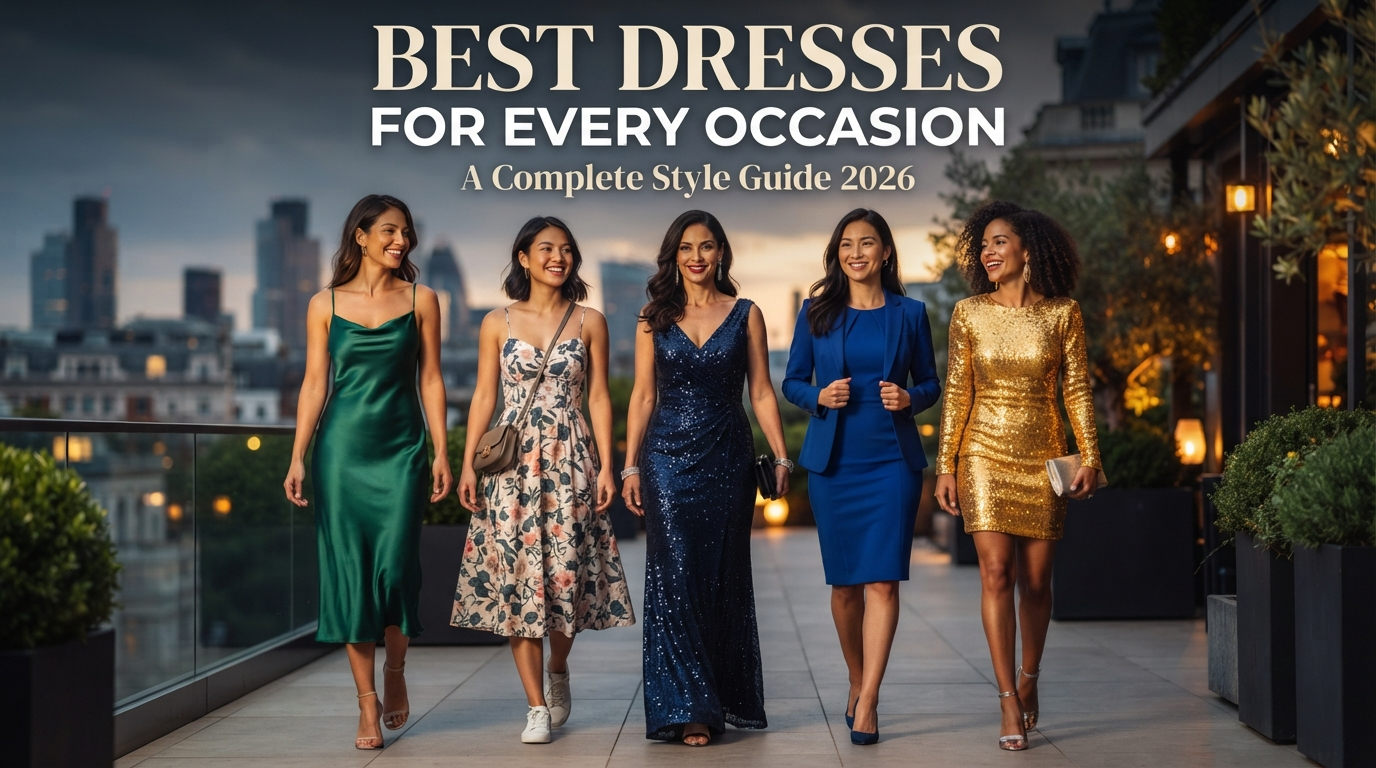
Best Dresses for Every Occasion: A Complete Style Guide 2026
From Casual to Formal — Find the Perfect Dress for Your Body Type and Event
Standing in front of a packed closet and still feeling like you have “nothing to wear” is one of the most common wardrobe frustrations out there. Whether you’re getting dressed for a brunch with friends, a job interview, a wedding, or a black-tie gala, the right dress can make you feel confident the moment you put it on — and the wrong one can leave you fidgeting all night.
This guide breaks down the best dresses for every occasion in 2026, with practical advice on choosing styles that flatter your body type, fit your budget, and match the vibe of the event. By the end, you’ll have a clear game plan for building a dress wardrobe that actually works for your life.
Why Choosing the Right Dress Matters More Than You Think
A dress does more than cover your body — it sets the tone for how you show up. Research in consumer psychology has long shown that clothing choices influence not just how others perceive us, but how we perceive ourselves, a phenomenon often called “enclothed cognition.” Put simply: when you feel good in what you’re wearing, you carry yourself differently.
That’s why picking a dress isn’t just about following trends. It’s about understanding:
- The occasion and its dress code
- Your personal body shape and what silhouettes flatter it
- The fabric and fit that will keep you comfortable for hours
- Your personal style, so the dress still feels like you
Let’s break this down occasion by occasion.
Casual Dresses: Comfortable, Everyday Style
Casual dresses are the backbone of a practical wardrobe. Think weekend errands, coffee dates, or a relaxed day at the office in a business-casual environment.
What to Look For
- Breathable fabrics like cotton, linen, or jersey knit
- Relaxed silhouettes such as shirt dresses, wrap dresses, or A-line sundresses
- Versatile lengths — knee-length or midi styles that transition easily from day to evening
Best Picks by Body Type
- Pear shapes benefit from A-line or fit-and-flare dresses that skim over the hips.
- Apple shapes look great in empire-waist or wrap dresses that define the smallest part of the torso.
- Hourglass shapes can wear almost anything fitted, but a belted casual dress emphasizes natural curves beautifully.
- Rectangle shapes can create curves with ruffled hems, gathered waists, or peplum details.
Pro tip: Layer a casual dress with a denim jacket or cardigan for cooler days — it instantly extends the dress’s wearability across seasons.
Work and Office Dresses: Professional Yet Personal
Office dress codes vary widely, but a well-chosen work dress should feel polished without sacrificing comfort during a long day.
Key Features of a Great Work Dress
- Structured fabric that holds its shape (ponte knit, crepe, or light wool blends)
- Modest necklines and hemlines appropriate for a professional setting
- Sleeve options (short, three-quarter, or long) depending on your office’s formality
Styling Tips
Sheath dresses remain a go-to for office wear because they’re tailored without being restrictive. Pairing one with a blazer instantly elevates the look for client meetings, while swapping to flats and a cardigan makes it approachable for a regular workday.
If your workplace leans more casual, a shirt dress with a thin belt strikes the right balance between put-together and relaxed.
Formal and Evening Dresses: Making a Statement
When it’s time for a gala, cocktail party, or upscale dinner, your dress needs to do a little more heavy lifting.
Formal Dress Categories
- Cocktail dresses — typically knee-length, perfect for semi-formal events
- Midi and maxi evening gowns — ideal for black-tie or formal dinners
- Sheath and column dresses — sleek, minimalist elegance for modern formal events
Choosing the Right Fabric
Formal occasions call for fabrics with a bit of luxury: satin, velvet, silk, or chiffon. These materials drape beautifully and photograph well — an important consideration if the event involves photos.
Flattering Formal Silhouettes by Body Type
- Petite frames look elongated in empire-waist gowns or dresses with vertical detailing.
- Curvier figures shine in fit-and-flare or mermaid silhouettes that highlight the waist.
- Broader shoulders are balanced beautifully by V-neck or sweetheart necklines.
- Straighter body types can add dimension with ruching, draping, or an asymmetrical hemline.
Wedding Guest Dresses: Respecting the Dress Code
Attending a wedding comes with its own set of unwritten rules. Choosing the right dress means reading the invitation carefully and respecting the couple’s chosen theme.
General Guidelines
- Avoid white or ivory unless explicitly stated it’s welcome
- Check the dress code listed on the invitation (black-tie, cocktail, casual, beach formal)
- Consider the season and venue — outdoor weddings call for breathable fabrics, while indoor evening receptions allow for richer materials
Popular Wedding Guest Styles for 2026
Floral midi dresses remain a timeless choice for daytime weddings, while jewel-toned satin dresses are trending for evening receptions. Pastel chiffon dresses continue to be a safe, elegant option for spring and summer ceremonies.
Special Occasionhttps://en.wikipedia.org/wiki/Special_Occasion Dresses: Birthdays, Parties, and Celebrations
Not every event fits neatly into “casual” or “formal.” Birthdays, anniversaries, and celebratory dinners often call for something in between — festive, fun, and a little more expressive than your everyday wardrobe.
What Works Well
- Sequined or metallic dresses for evening celebrations
- Bold-colored wrap dresses for daytime parties
- Statement-sleeve or textured dresses that stand out without needing extra accessories
These occasions are a great opportunity to experiment with trends you might not wear to work or a wedding — think bold prints, unconventional cuts, or a pop of color you’ve been wanting to try.
How to Find the Perfect Dress for Your Body Type
Understanding your body shape is one of the most useful tools for dress shopping, because it helps you skip the trial-and-error and go straight to styles that flatter.
Quick Reference Guide
| Body Type | Recommended Silhouettes | Necklines to Try |
|---|---|---|
| Pear | A-line, fit-and-flare | Boat neck, off-shoulder |
| Apple | Empire waist, wrap | V-neck, scoop neck |
| Hourglass | Sheath, wrap, bodycon | Sweetheart, V-neck |
| Rectangle | Peplum, ruffled, belted | Halter, one-shoulder |
| Inverted triangle | A-line, full skirt | V-neck, deep scoop |
Keep in mind that these are starting points, not strict rules. Personal comfort and confidence should always guide the final decision — a dress that photographs perfectly but feels wrong to wear isn’t the right choice for you.
Common Dress-Shopping Mistakes to Avoid
Even with the best intentions, it’s easy to fall into a few common traps when shopping for dresses:
- Buying for a future weight goal instead of your current body — a dress should fit and flatter you now.
- Ignoring fabric care instructions, especially for delicate materials like silk or lace that may need dry cleaning.
- Skipping the try-on process when shopping online, without checking the return policy first.
- Overlooking undergarments — shapewear, adhesive bras, or slip dresses can dramatically change how a dress fits and moves.
- Prioritizing trends over fit — a well-fitted classic style will almost always look better than an ill-fitting trendy one.
Frequently Asked Questions
What is the most versatile dress to own?
A well-fitted wrap dress in a neutral color is widely considered the most versatile option, since it can be dressed up with heels and jewelry for formal events or down with sandals for casual outings.
How do I know what dress length is appropriate for an event?
As a general rule, formal evening events call for midi or maxi lengths, cocktail parties suit knee-length dresses, and casual daytime events work well with mini to midi lengths. When in doubt, checking the event’s dress code or asking the host is always a safe approach.
Can one dress work for multiple occasions?
Yes. A midi-length dress in a solid, neutral color is often the most adaptable piece, since it can be restyled with different shoes, jackets, and accessories to suit casual, work, or semi-formal settings.
What fabric is best for hot weather events?
Lightweight, breathable fabrics like cotton, linen, and rayon are ideal for warm-weather occasions, as they allow airflow and reduce discomfort during long hours outdoors.
How can I make an inexpensive dress look more formal?
Adding statement jewelry, a tailored blazer, or elegant heels can elevate a simple or budget-friendly dress. Getting the fit tailored to your body is also one of the most effective ways to make any dress look more polished and expensive.
Final Thoughts: Build a Dress Wardrobe That Works for You
The best dress wardrobe isn’t necessarily the biggest one — it’s the one that’s built thoughtfully around the occasions you actually attend and the silhouettes that make you feel your best. Start by identifying gaps in your current collection: Do you have a reliable work dress? A formal option for last-minute invitations? A casual go-to for weekends?
Rather than shopping impulsively, use this guide as a checklist. Focus on quality basics in flattering silhouettes, then build outward with statement pieces for special occasions.
Ready to refresh your wardrobe? Start with one versatile piece — a wrap dress or sheath dress in a color you love — and build from there. The right dress isn’t just about looking good for an event; it’s about feeling confident enough to fully enjoy it.
Internal linking opportunities: Link to related articles such as “How to Accessorize Any Dress,” “Seasonal Color Guide for 2026,” “Body Type Style Guide,” or “Wedding Guest Etiquette 101” where relevant on your site.

Post Comment