Korean Hairstyle Names & Pictures: Complete Trend List for 2026
If you’ve ever scrolled through a K-drama and paused mid-episode just to admire the lead actor’s perfectly tousled hair, you’re not alone. Korean hair trends have quietly taken over global beauty conversations, and it’s not hard to see why. They’re versatile, low-maintenance in ways you wouldn’t expect, and somehow manage to look effortless and intentional at the same time.
Whether you’re a man looking for something sharper than your usual fade, a woman wanting to soften your look with curtain bangs, or someone exploring gender-neutral styles that break away from traditional norms, Korean hairstyles offer something for nearly everyone. In this guide, we’ll walk through the most popular Korean hairstyles for all genders in 2026, explain what makes each one work, and give you practical tips for asking your stylist the right questions.
By the end, you’ll have a clear picture of which cut fits your face shape, hair texture, and lifestyle — plus enough vocabulary to avoid the awkward “just give me something like this photo” moment at the salon.
Why Korean Hairstyles Are So Popular Right Now
Korean hairstyle trends didn’t become global overnight. They grew out of a combination of K-pop styling, K-drama influence, and Korea’s skincare-first approach to beauty, where hair is treated as an extension of overall grooming rather than an afterthought.
A few reasons these styles keep gaining traction:
- They flatter a wide range of face shapes. Many popular cuts use soft layering and face-framing pieces that work for round, oval, square, and heart-shaped faces alike.
- They’re gender-flexible by design. Unlike some Western trends that lean heavily masculine or feminine, many Korean styles sit comfortably in between, which is part of why they resonate with such a broad audience.
- Styling tends to be simpler than it looks. A lot of these cuts rely on the haircut itself doing the heavy lifting, so daily styling often just means a blow-dry and a little texture spray.
Popular Korean Hairstyles for Men
Korean men’s hairstyles typically favor soft, textured shapes over harsh, sharp lines. Volume on top paired with a neat perimeter is the signature look.
Two-Block Haircut
This is arguably the most requested Korean men’s haircut internationally. The sides and back are cut short — sometimes faded, sometimes just clipped close — while the top is left long enough to style with volume and texture. It’s called “two-block” because of the visible contrast between the two lengths.
Best for: Straight to slightly wavy hair, oval or square face shapes.
C-Curl Perm
The C-curl perm gives hair a soft, inward curve at the ends, framing the face gently rather than sitting flat. It’s a subtle perm — not the tight curls people associate with older perm styles — and it’s become a staple for anyone wanting texture without much daily effort.
Best for: Fine or straight hair that struggles to hold natural volume.
Korean Fringe (Bangs) for Men
Soft, slightly parted bangs that skim the eyebrows are common in Korean men’s styling. They soften angular features and pair well with both the two-block cut and longer hairstyles.
Best for: Square or long face shapes looking to shorten visual length.
Popular Korean Hairstyles for Women
Korean women’s hairstyles often center on movement, softness, and natural-looking layers rather than heavily structured shapes.
Hime Cut (Modernized)
While technically rooted in Japanese fashion history, the hime cut has been reinterpreted in Korean beauty culture with softer, less severe lines. It features straight, blunt hime bangs paired with long side pieces and layered lengths.
Best for: Straight, healthy hair with minimal frizz.
Curtain Bangs
Curtain bangs remain one of the most requested Korean hairstyle names in salons worldwide. Parted down the middle and swept to either side, they frame the face without the commitment of a full fringe.
Best for: Nearly every face shape, which is part of their enduring popularity.
Layered Long Hair with Wispy Ends
Long hair in Korean beauty trends usually isn’t left completely blunt. Soft, wispy layers around the face and ends add movement and prevent the “heavy curtain” look that can happen with long, one-length hair.
Best for: Medium to thick hair that needs texture to avoid looking flat.
Gender-Neutral and Unisex Korean Hairstyles
One of the more interesting developments in Korean hair trends is the rise of styles that aren’t marketed specifically to men or women.
Wolf Cut
The wolf cut blends a shag with a mullet — heavily layered, textured, and messy by design. It’s grown into a favorite among people who want a low-maintenance style that still looks deliberately styled.
Best for: Wavy or textured hair; less ideal for very fine, straight hair without added texture.
Money Piece Highlights with Layered Cut
While technically a coloring technique rather than a cut, money piece highlights — face-framing strands lightened a shade or two brighter than the rest — are frequently paired with layered Korean cuts for both men and women.
How to Choose the Right Korean Hairstyle for Your Face Shape
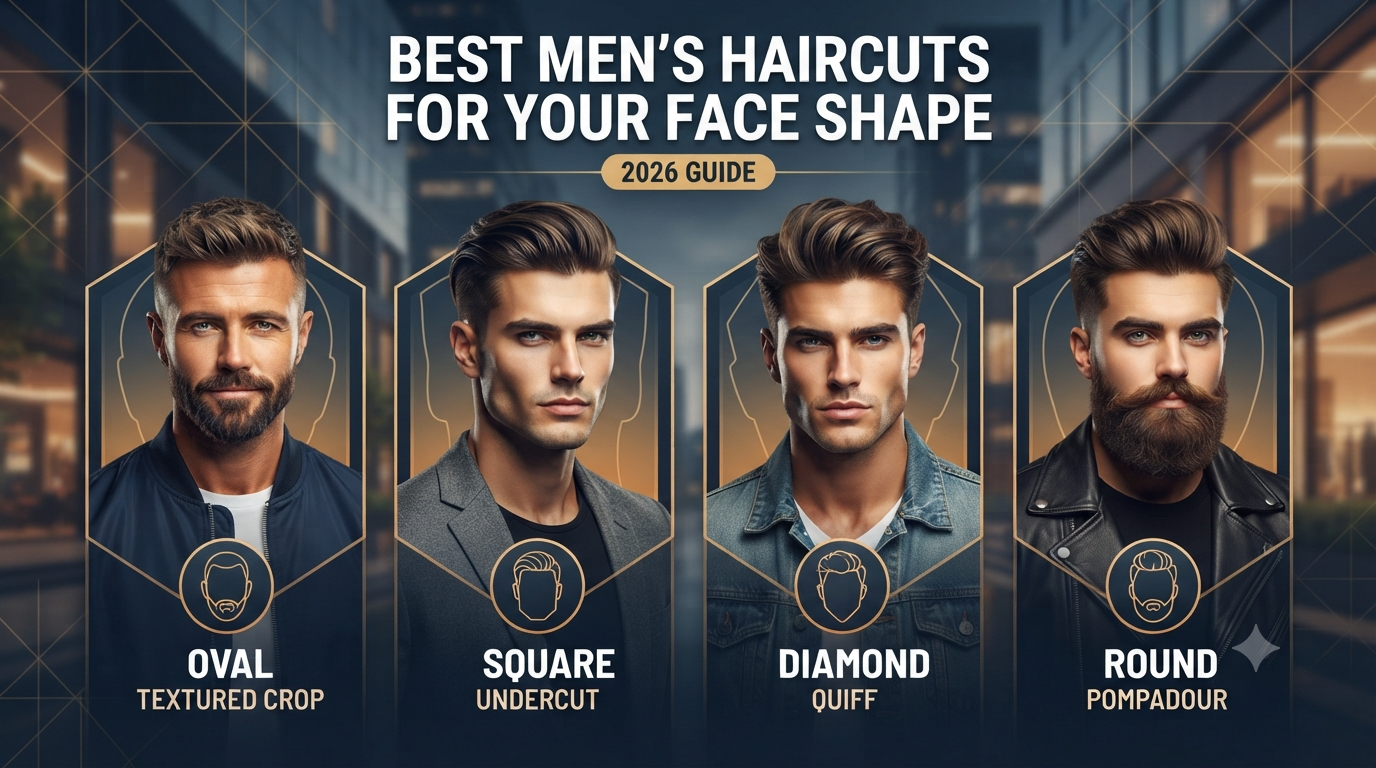
Picking a style based on a photo alone can backfire if your face shape or hair texture differs significantly from the model in the picture. Here’s a quick reference:
- Round face: Styles with height at the crown and longer face-framing pieces, like curtain bangs or a two-block cut with volume, help elongate the face.
- Square face: Soft, wispy bangs or side-swept fringe soften strong jawlines.
- Oval face: Most Korean styles work well here — this is considered the most versatile face shape.
- Heart-shaped face: Chin-length layers or curtain bangs balance a narrower jawline against a wider forehead.
Styling Tips to Get the Korean Hair Look at Home
Getting the cut is only half the equation — styling technique matters just as much.
- Blow-dry with a round brush, directing hair away from the face at the roots for volume, then curving ends inward or outward depending on the style.
- Use a light texturizing spray or wax, not heavy pomade. Korean styling generally favors matte, lightweight products over high-shine finishes.
- Air-dry when possible for wavy or textured cuts like the wolf cut, scrunching in a light mousse to enhance natural texture.
- Trim regularly — many of these cuts rely on precise layering, and growing them out unevenly can quickly lose the intended shape.
Common Questions About Korean Hairstyles
What is the most popular Korean hairstyle right now?
For men, the two-block haircut remains the most requested style. For women, curtain bangs continue to dominate, largely because they suit almost any face shape and hair type.
Are Korean hairstyles hard to maintain?
Not typically. Most rely on a good initial cut rather than complicated daily styling. That said, layered and permed styles do benefit from regular trims every six to eight weeks to keep their shape.
Can I get a Korean hairstyle with curly or coily hair?
Yes, though some adjustment is usually needed. A stylist experienced with textured hair can adapt cuts like the wolf cut or layered long styles to work with natural curl patterns rather than against them.
Do I need a perm to get the C-curl look?
Not always. If your hair already has some natural bend, a round-brush blowout can mimic the C-curl shape without a chemical perm. For consistently straight hair, a light perm gives longer-lasting results.
How do I explain a Korean hairstyle to my stylist?
Bring reference photos and use specific terms like “two-block,” “curtain bangs,” or “wolf cut” rather than general descriptions. Naming the style helps your stylist understand the intended shape and layering technique, even if the final look is adapted to your hair type.
Final Thoughts
Korean hairstyles have earned their global popularity for good reason — they’re adaptable, generally low-fuss once cut correctly, and designed with a wide range of face shapes and hair textures in mind. Whether you’re drawn to the sharp-meets-soft contrast of a two-block cut, the face-framing ease of curtain bangs, or the deliberately undone texture of a wolf cut, there’s likely a version of these trends that will work for you.
The best next step is simple: save a few reference photos, note the specific style names from this guide, and book a consultation with a stylist who can assess your hair type and face shape in person. A good consultation will save you from a “close but not quite” result and get you the look you actually wanted.
Looking for more hair inspiration? Check out our guides on [K-beauty skincare routines] and [seasonal hair color trends] for a complete style refresh.

Post Comment