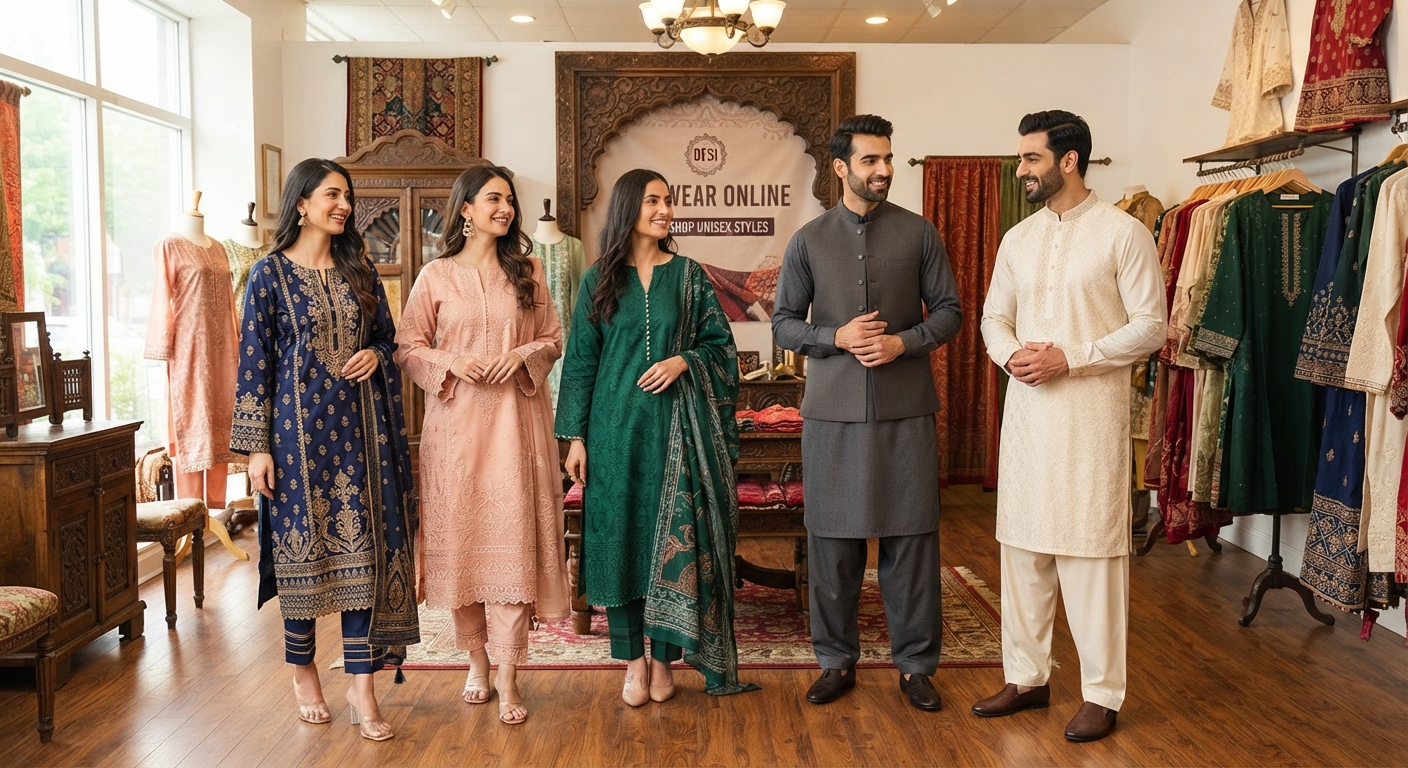
Unisex Pakistani Outfits – Shop Traditional Desi Wear Online
Pakistani fashion has always been rich, colorful, and deeply rooted in tradition. But over the last few years, something interesting has happened: the rigid line between “men’s wear” and “women’s wear” has started to blur. More shoppers are searching for pieces that fit their comfort, their body, and their personal style — not just their gender. That’s exactly where unisex Pakistani outfits come in.
If you’ve ever felt boxed in by clothing aisles labeled strictly “for him” or “for her,” you’re not alone. This shift toward gender-neutral fashion isn’t a passing trend — it’s a genuine change in how people want to dress: comfortably, confidently, and authentically. In this guide, we’ll walk through what unisex Pakistani outfits actually are, which styles are leading the movement, how to choose the right fit and fabric, and where to shop traditional desi wear online with confidence.
By the end, you’ll know exactly what to look for, how to style these pieces, and how to build a wardrobe that works for you — no matter your gender identity or personal aesthetic.
What Are Unisex Pakistani Outfits?
Unisex Pakistani outfits are traditional garments designed or tailored so they can be worn comfortably by people of any gender. Instead of being cut specifically for a “male” or “female” body shape, these pieces focus on relaxed silhouettes, adjustable fits, and neutral color palettes that suit everyone.
This isn’t actually a brand-new idea. Historically, many classic Pakistani garments — like the kurta and shalwar — were never strictly gendered to begin with. A simple straight-cut kurta paired with a shalwar has been worn by men and women alike for generations across South Asia, especially in rural and semi-formal settings. What’s changed is that fashion brands are now intentionally marketing and designing these pieces as unisex, making them easier to find, size, and style.
Why This Trend Is Growing
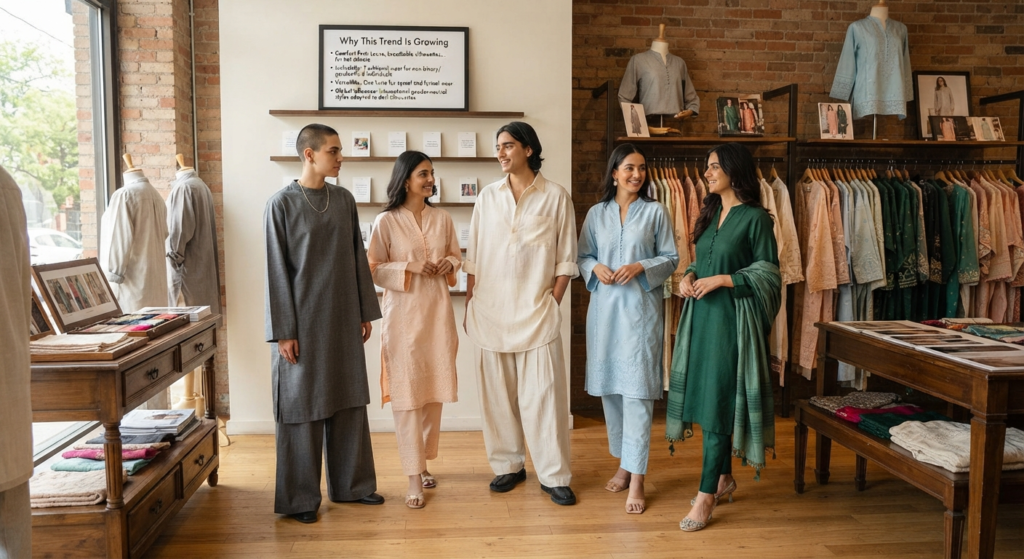
A few real reasons are driving this shift:
- Comfort first. Loose, breathable silhouettes are simply more practical for Pakistan’s hot climate and everyday movement.
- Inclusivity. More people — including non-binary and gender-fluid individuals — want traditional wear that doesn’t force them into a binary category.
- Versatility. One kurta that works for a casual outing, a family gathering, or a semi-formal event is genuinely more cost-effective.
- Global influence. International fashion has embraced gender-neutral dressing for years, and Pakistani designers are adapting that same philosophy to desi silhouettes.
Popular Types of Unisex Pakistani Outfits
Not every traditional garment translates well into a unisex style, but several have become staples in this space.
1. The Classic Kurta
The kurta is arguably the most naturally unisex piece in Pakistani fashion. A straight-cut kurta, falling anywhere from hip-length to knee-length, works beautifully on any body type. Look for:
- Side slits for ease of movement
- Round or mandarin collars (rather than deep V-necks, which tend to skew more feminine)
- Cotton, lawn, or linen fabric for breathability
2. Shalwar Kameez Sets
The shalwar kameez — a tunic paired with loose trousers — is one of the most recognizable Pakistani outfits worldwide. In its traditional, straight-cut form, it’s already close to gender-neutral. Brands now offer these sets in solid, muted tones (olive, rust, charcoal, off-white) that avoid overtly gendered embellishments like heavy embroidery or sequins.
3. Waistcoats (Sadri) Over Kurtas
Layering a simple waistcoat over a kurta adds structure and a slightly more elevated look, without leaning into a specific gender aesthetic. This combination works for weddings, Eid gatherings, or even smart-casual outings.
4. Pathani Suits
Originating from the Pashtun regions of Pakistan, the Pathani suit — with its loose kurta and wide-legged shalwar — has always had a relaxed, gender-flexible silhouette. It’s now being reintroduced by modern designers as a genuinely unisex option, often in earthy or neutral color palettes.
5. Angrakha-Style Tunics
The angrakha, with its signature front overlap and tie closures, is gaining popularity as a unisex piece because of its adjustable fit — the wrap style naturally accommodates different body shapes without needing multiple sizes.
How to Choose the Right Unisex Pakistani Outfit
Picking the right piece isn’t just about grabbing any loose-fitting kurta. A few details matter.
Focus on Fabric
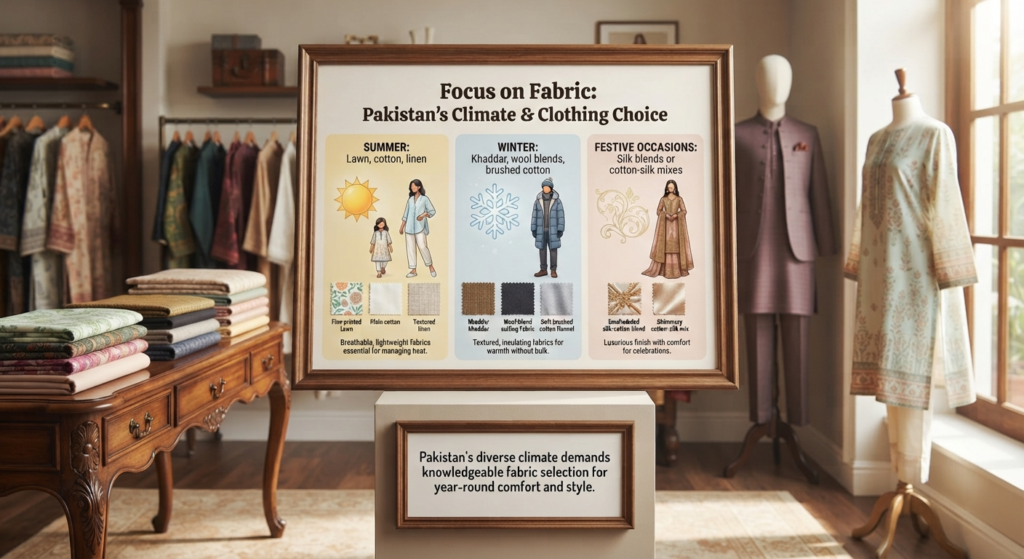
Pakistan’s climate ranges from scorching summers to mild winters, so fabric choice matters more than most people realize.
- Summer: Lawn, cotton, linen
- Winter: Khaddar, wool blends, brushed cotton
- Festive occasions: Silk blends or cotton-silk mixes for a slightly dressier finish without sacrificing comfort
Prioritize Fit Over Size Labels
Traditional Pakistani sizing (small, medium, large) doesn’t always translate cleanly across body types. When shopping online, always check:
- Chest and shoulder measurements
- Total length of the kurta or tunic
- Sleeve length, especially for taller or broader frames
A good rule of thumb: unisex pieces are designed with a slightly relaxed fit by default, so if you’re between sizes, sizing up usually gives a more authentic, comfortable drape.
Color and Embellishment Choices
If you want a piece that reads as genuinely gender-neutral, lean toward:
- Solid or subtly textured fabrics
- Earthy tones — beige, olive, rust, charcoal, off-white, navy
- Minimal embroidery, or geometric/border patterns instead of florals
Styling Tips for Unisex Pakistani Wear
Traditional doesn’t have to mean predictable. Here’s how to make unisex Pakistani outfits work for different occasions.
Casual Everyday Look
Pair a straight-cut cotton kurta with slim-fit trousers or a simple shalwar, and finish with khussa or comfortable sandals. This combination works well for daily errands, casual meetups, or relaxed office environments where traditional wear is acceptable.
Semi-Formal Gatherings
Layer a waistcoat over a kurta, add a stole or shawl in a contrasting neutral shade, and opt for slightly more structured footwear. This look transitions easily from a family dinner to a small celebration.
Festive or Eid Occasions
Choose a cotton-silk kurta in a richer tone — maroon, deep teal, or mustard — paired with a churidar or straight shalwar. Add subtle accessories like a simple chain or minimal jewelry that doesn’t lean strongly masculine or feminine.
Where to Shop Traditional Desi Wear Online
When shopping for unisex Pakistani outfits online, a few things separate a good buying experience from a frustrating one:
- Detailed size charts — Look for brands that provide exact measurements, not just S/M/L labels.
- Fabric transparency — Reliable sellers clearly state fabric composition (100% cotton vs. cotton blend, for example).
- Real customer photos — Reviews with actual photos give a much more accurate sense of fit and color than studio shots alone.
- Easy returns/exchanges — Since unisex fit can vary by body type, a flexible return policy is genuinely important.
- Regional shipping options — If you’re ordering from outside Pakistan, confirm customs handling and delivery timelines before purchasing.
(If your store has category pages for kurtas, shalwar kameez sets, or festive wear, this is a natural place to link to them for readers who want to browse specific collections.)
Frequently Asked Questions
1. Are unisex Pakistani outfits actually different from regular men’s or women’s clothing? Yes, though the difference is often subtle. Unisex pieces are cut with a more relaxed, straight silhouette, use neutral colors, and skip gender-specific detailing like deep necklines or heavy floral embroidery, making them comfortable and appropriate for any wearer.
2. What fabric is best for unisex Pakistani outfits in summer? Lawn and cotton are the top choices for Pakistan’s hot summers. Both fabrics are breathable, lightweight, and widely available in solid, neutral tones that suit a unisex aesthetic.
3. Can unisex Pakistani outfits be worn for weddings or formal events? Absolutely. A well-tailored kurta with a waistcoat, or a cotton-silk shalwar kameez in a richer color, can easily be dressed up for semi-formal or festive occasions.
4. How do I find the right size when buying unisex outfits online? Always check the brand’s detailed measurement chart rather than relying on standard S/M/L labels, since unisex fits vary between brands. Measuring your chest, shoulders, and preferred garment length beforehand makes online shopping much more accurate.
5. Is unisex Pakistani fashion a passing trend? It doesn’t look like it. Many traditional Pakistani garments were historically close to gender-neutral to begin with, so this shift is less of a new trend and more of a return to practical, comfortable design — now supported by modern marketing and better sizing options.
Final Thoughts
Traditional Pakistani attire for men, women, and unisex styles is no longer about squeezing into rigid categories — it’s about finding pieces that genuinely fit your comfort, your climate, and your personal sense of style. Whether you’re drawn to a classic straight-cut kurta, a relaxed shalwar kameez set, or a layered Pathani-style outfit, there’s more room than ever to dress authentically while staying connected to rich cultural roots.
Ready to build a wardrobe that fits you — not just a label? Explore our full collection of unisex Pakistani outfits online today and find pieces designed for real comfort, real versatility, and real style.

Post Comment