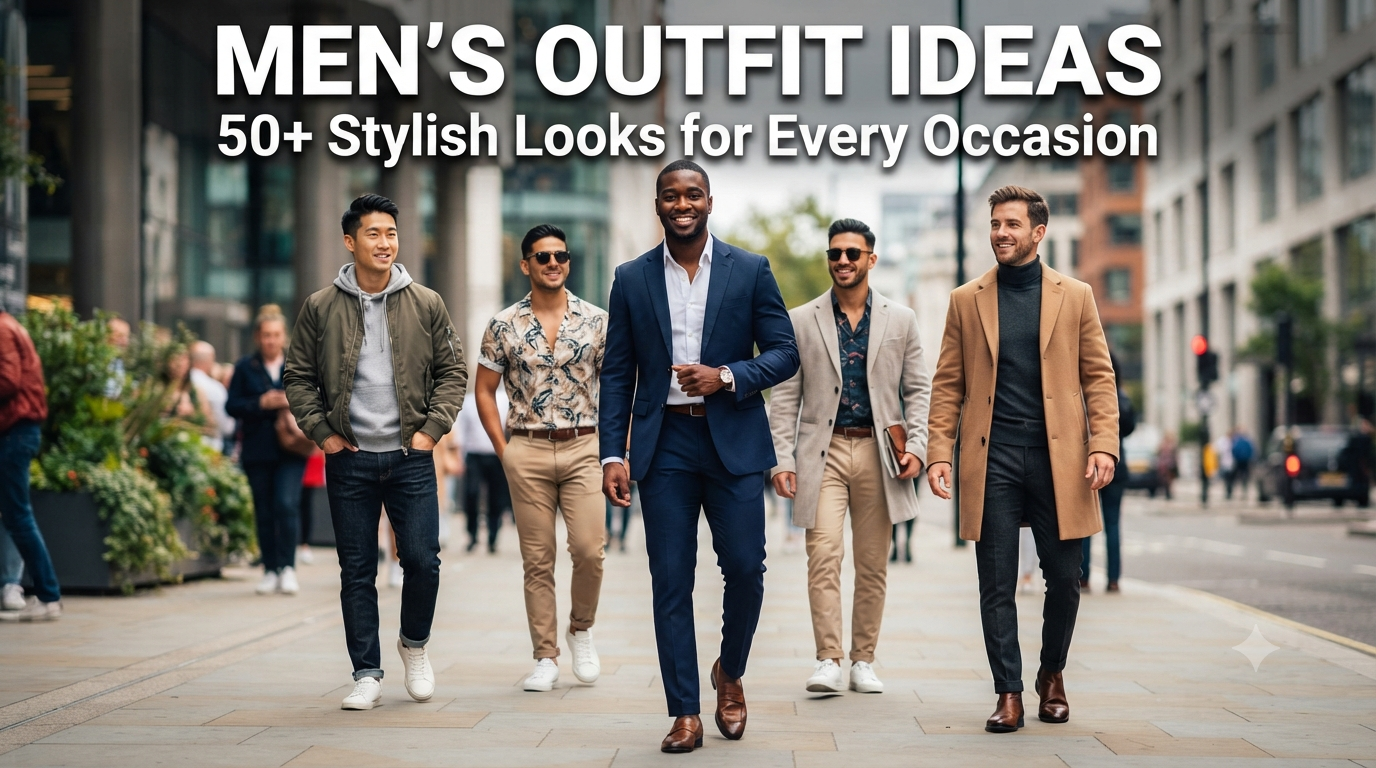
Men’s Outfit Ideas: 50+ Stylish Looks for Every Occasion
Standing in front of a full closet and still feeling like you have “nothing to wear” is one of the most common — and most fixable — problems in men’s fashion. It’s rarely about owning too little. It’s about not knowing how to put the pieces together with intention.
This guide breaks down men’s outfit ideas for every part of life: the office, weekend errands, first dates, weddings, and everything between. You’ll walk away with real combinations you can recreate this week, plus the underlying principles that let you build new outfits on your own instead of copying a photo. Think of this as the ultimate style guide to dressing sharp every day — from casual to formal, without needing a stylist or a bigger budget.
Why Most Men Struggle to Put Together an Outfit
Before jumping into looks, it helps to understand the real problem. Most men don’t lack clothes — they lack a system. A closet full of items purchased separately, with no shared color palette or purpose, will always feel harder to dress from than a smaller, coordinated wardrobe.
Three things typically go wrong:
- Fit is ignored. Even expensive clothing looks cheap when it’s too baggy or too tight.
- Everything is bought as a “one-off.” A shirt is picked because it looked good on a mannequin, not because it works with three things already owned.
- Occasion and fabric get mismatched. Wearing office fabrics on the weekend (or the reverse) is one of the fastest ways to look out of place.
Fixing these three issues alone will improve how put-together someone looks more than any single new purchase.
Building a Capsule Wardrobe: The Foundation of Every Great Outfit
A capsule wardrobe is a small, deliberately chosen set of clothing where nearly everything can be mixed and matched. This is the backbone behind almost every “effortless” outfit you see on well-dressed men.
Core Capsule Pieces Every Man Should Own
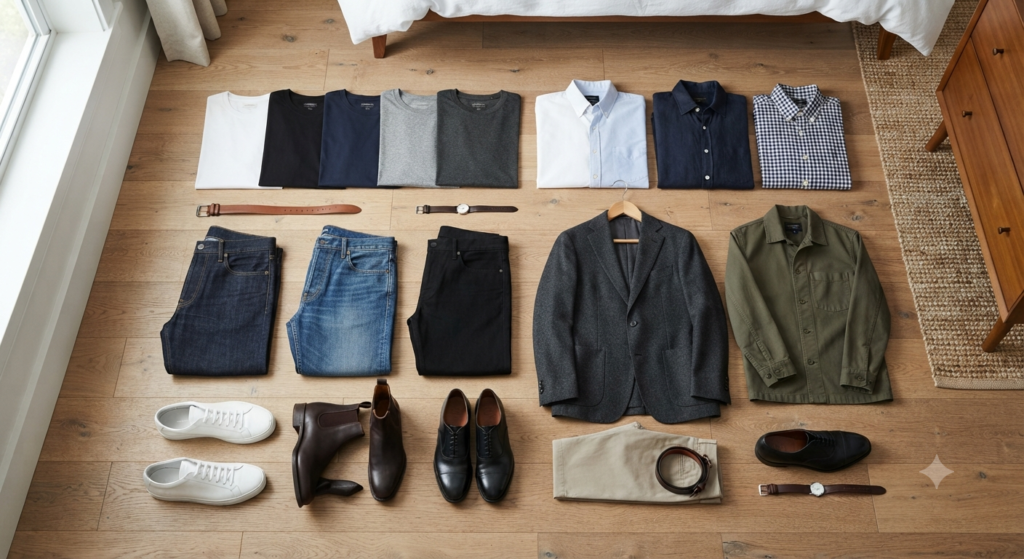
- 2–3 pairs of well-fitted jeans (dark wash, medium wash, black)
- 1 pair of chinos or tailored trousers in a neutral tone
- 5–7 versatile t-shirts (white, black, navy, heather grey)
- 3–4 button-down shirts (one white, one light blue, one pattern)
- 1 lightweight jacket or overshirt
- 1 tailored blazer in navy or charcoal
- 1 pair of clean white sneakers
- 1 pair of leather boots or loafers
- 1 pair of dress shoes (oxford or derby)
Once these pieces exist in a coordinated palette — think navy, grey, white, black, and one or two accent colors — nearly any two items can be paired together without clashing. This is what makes getting dressed fast and stress-free.
Casual Outfit Ideas for Everyday Wear
Casual doesn’t have to mean sloppy. The goal is comfort that still looks intentional.
Weekend Errands and Coffee Runs
A simple, high-value combination: well-fitted dark jeans, a plain white or heather-grey tee, clean white sneakers, and a lightweight bomber or denim jacket. Add a minimalist watch and you have a look that takes two minutes to put on but reads as put-together.
Casual Friday or Smart-Casual Office Days
Swap the tee for a solid-color polo or a rolled-sleeve button-down, keep the jeans dark and unripped, and finish with loafers or clean leather sneakers. This bridges the gap between weekend comfort and office professionalism.
Streetwear-Inspired Casual
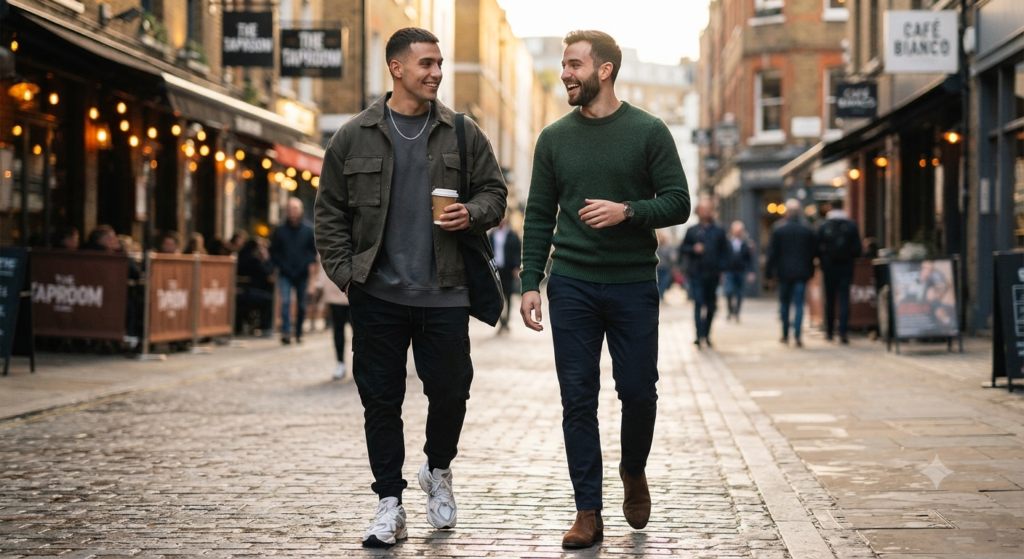
For a more modern edge: an oversized (but not baggy) hoodie or crewneck, tapered joggers or straight-leg cargo pants, and chunky sneakers. Layer with a structured jacket to keep it from looking too relaxed.
Date Night, Casual Version
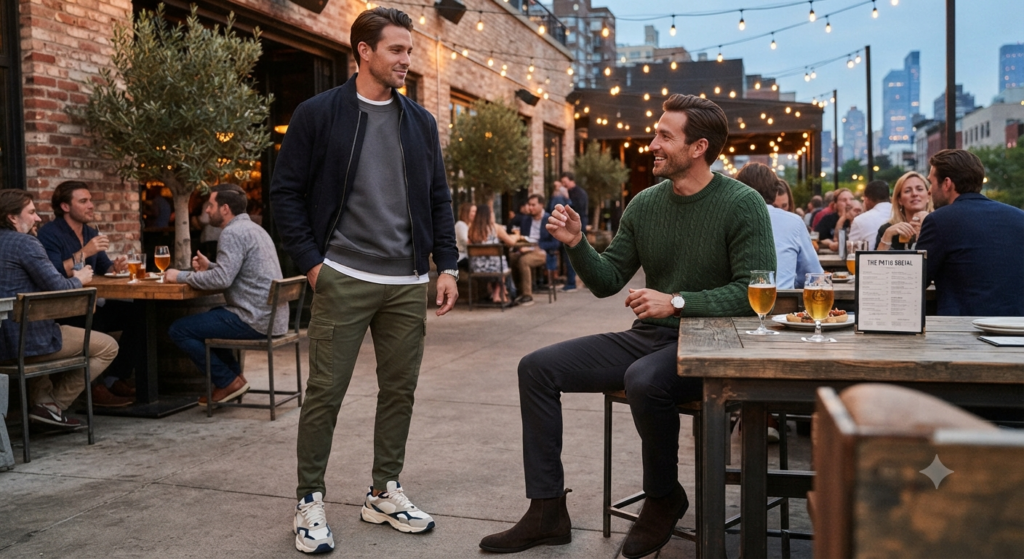
A textured crewneck sweater in a rich color (burgundy, forest green, or navy) paired with dark chinos and suede boots signals effort without looking overdressed for a casual restaurant or bar.
Smart-Casual and Business-Casual Outfit Ideas
Smart-casual is where most men feel the least confident, largely because the “rules” are the vaguest. The trick is combining one structured piece with one relaxed piece.
The Blazer-and-Jeans Combo
A well-fitted navy blazer, a plain white t-shirt or oxford shirt, dark jeans, and leather loafers or minimalist sneakers. This single formula works for dinners, networking events, and creative-industry offices.
Office-Ready Business Casual
Tailored chinos, a tucked-in button-down shirt, a leather belt matched to your shoes, and derby shoes or loafers. Adding a fine-knit sweater or vest in cooler months keeps it seasonal without sacrificing polish.
Layered Smart-Casual for Cooler Weather
A quarter-zip sweater over a collared shirt, paired with chinos and boots, is a reliable formula for fall and winter offices, especially in colder cities like New York, Chicago, or Boston.
Formal Outfit Ideas for Special Occasions
Formalwear rewards attention to detail more than any other category. Fit, fabric quality, and accessories matter enormously here.
Business Formal for Meetings and Interviews
A well-tailored suit in navy, charcoal, or grey, a crisp white or light-blue dress shirt, a conservative tie, and polished oxford shoes. Stick to a belt and shoes in matching leather tones — brown with brown, black with black.
Wedding Guest Outfits
For daytime weddings, lighter fabrics and colors work well: tan or light grey suits with pastel shirts. For evening weddings, darker suits (navy or charcoal) with a subtly patterned tie strike the right balance between festive and respectful.
Black-Tie and Formal Events
A classic black tuxedo, a white formal shirt, a black bow tie, and patent leather oxford shoes remain the gold standard. Cufflinks and a pocket square add refinement without overcomplicating the look.
Seasonal Outfit Ideas: Dressing for the Weather
Great style also accounts for climate and season, not just occasion.
Summer Outfits
Lightweight linen shirts, breathable chinos or shorts, and canvas or suede sneakers keep you cool while looking sharp. Lighter colors — white, tan, light blue — also reflect heat and suit the season visually.
Winter Outfits
Wool overcoats, chunky knit sweaters, thermal-lined jackets, and leather boots are both functional and stylish. Layering becomes your best styling tool: a shirt, sweater, and coat can be mixed and matched to create dozens of combinations from a handful of pieces.
Transitional Fall and Spring Outfits
Medium-weight jackets like denim trucker jackets, field jackets, or unlined blazers work well when temperatures fluctuate throughout the day.
How to Choose the Right Outfit for Any Occasion
A simple three-question framework removes most of the guesswork:
- What is the setting? Office, casual outing, formal event, or athletic activity.
- Who will be there? Colleagues, a date, family, or strangers at a public event.
- What is the weather and venue? Indoor versus outdoor, air-conditioned office versus open-air venue.
Once these three answers are clear, matching fabric weight, formality level, and color palette becomes far easier — and outfit anxiety drops significantly.
Common Style Mistakes to Avoid
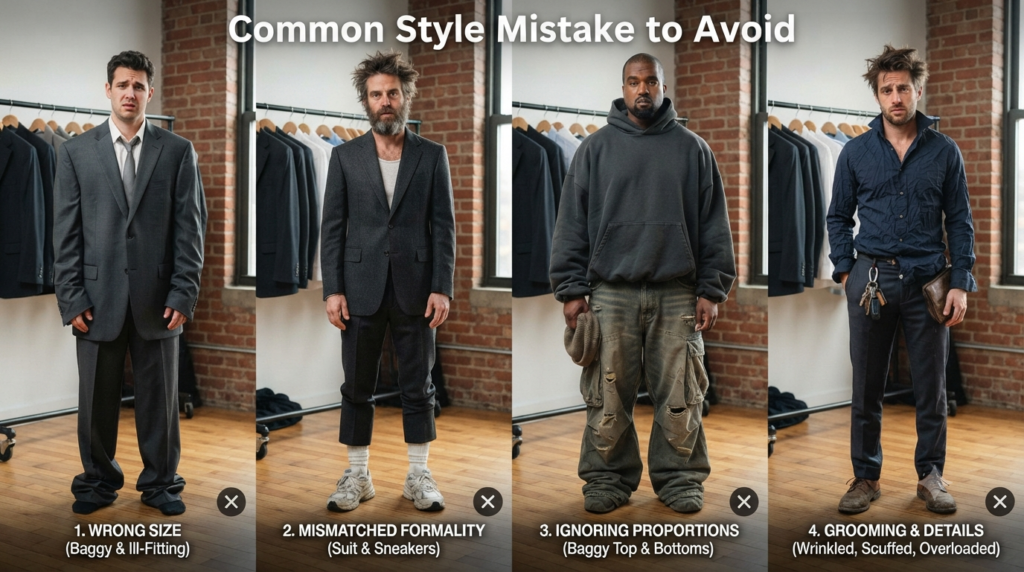
- Wearing the wrong size. Both oversized and overly tight clothing undermine an otherwise good outfit. When unsure, size up on outerwear and size true on base layers.
- Mismatched formality. Sneakers with a formal suit (unless intentionally styled) or dress shoes with athletic wear rarely reads as “cool” — it reads as mismatched.
- Ignoring proportions. Pairing baggy tops with baggy bottoms creates a shapeless silhouette. Balance loose with fitted.
- Overlooking grooming and accessories. A great outfit can be undercut by scuffed shoes, a wrinkled shirt, or an overloaded key chain visible in a pocket.
Frequently Asked Questions
What is the easiest men’s outfit formula for beginners? Dark jeans, a plain t-shirt or button-down, clean white sneakers, and a simple jacket. This combination works across countless casual and smart-casual settings and is nearly impossible to get wrong.
How many outfits does a versatile men’s wardrobe actually need? A well-chosen capsule wardrobe of around 25–30 coordinated pieces can typically create 50+ distinct outfit combinations, which is more than enough for most lifestyles.
What should I wear if I’m unsure about the dress code? When in doubt, lean slightly more formal than you expect is needed. It’s easier to remove a blazer or roll up sleeves than to compensate for being underdressed.
How do I know if my clothes fit properly? Shoulders should align with the shoulder seam of shirts and jackets, sleeves should end near the wrist bone, and trousers should have a slight break at the shoe without pooling fabric.
Is it okay to repeat outfits often? Yes. Repeating well-fitted, versatile pieces is a hallmark of intentional style, not a lack of options — many well-dressed men rotate a smaller set of high-quality items rather than owning excessive amounts of clothing.
Final Thoughts: Building Confidence Through Style

Great personal style isn’t about owning the most clothes or following every trend — it’s about understanding fit, fabric, and occasion well enough to get dressed with confidence every single day. Start with a small capsule wardrobe, apply the three-question framework for any event, and use the outfit ideas above as templates rather than rigid rules.
Ready to put this into practice? Pick one section from this guide — casual, smart-casual, or formal — and rebuild three outfits from your existing closet this week using the principles above. Small, consistent changes compound into a wardrobe that works for you, not against you.

Post Comment