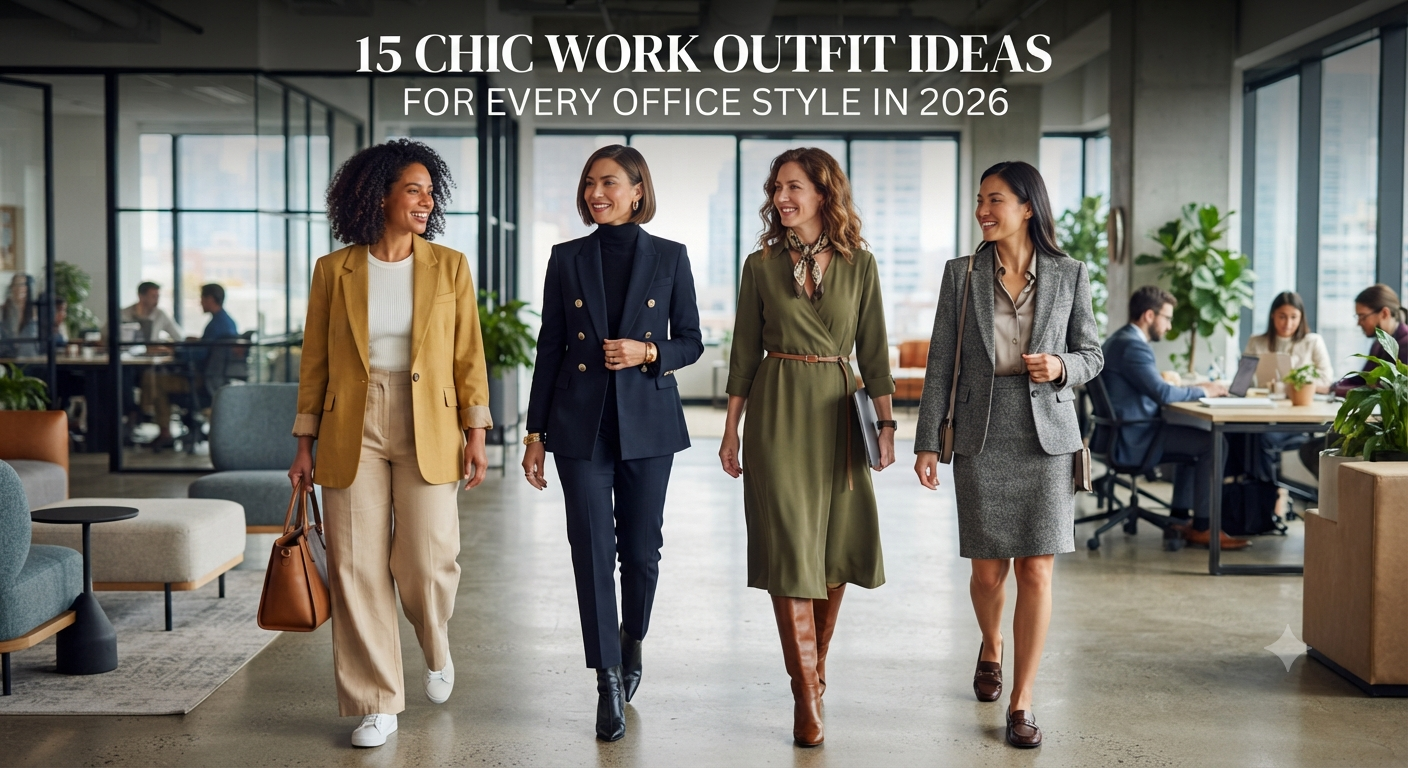
15 Chic Work Outfit Ideas for Every Office Style in 2026
What to wear to work is one of those questions that sounds simple until you’re standing in front of a full closet, running late, and still feeling like you have nothing to put on. You’re not being dramatic — dressing for work is genuinely harder than it used to be. Dress codes have loosened, hybrid schedules have blurred the line between “home clothes” and “work clothes,” and what counted as professional five years ago can look dated or oddly formal today.
This guide breaks down exactly what to wear to work, no matter what kind of office you walk into. Whether you’re in a law firm boardroom, a business casual marketing agency, or a jeans-and-hoodies startup, you’ll find outfit ideas you can actually recreate — plus tips on building a work wardrobe that doesn’t require a shopping spree every season.
What to Wear to Work: How to Read Your Office Dress Code
Before picking outfits, it helps to know which bucket your workplace falls into. Most offices land in one of three categories, and getting this right matters more than any individual outfit choice.
Business Formal
Think law firms, finance, government roles, and client-facing corporate positions. Suits, tailored blazers, closed-toe shoes, and a fairly conservative color palette (navy, black, gray, camel) are the norm.
Business Casual
This is the most common — and most confusing — category. It covers everything from consulting firms to healthcare admin to mid-size corporate offices. The general rule: polished but not stiff. Blazers are optional, dress pants or chinos are expected, and sneakers are usually a stretch too far.
Casual or Creative
Startups, tech companies, design studios, and many remote-hybrid roles fall here. Jeans are typically fine, but “casual” doesn’t mean sloppy — there’s still an expectation that you look put-together, just without the formality.
If you’re new to a job, the safest move is to slightly overdress for the first week or two, then calibrate based on what you actually see your coworkers wearing.
Work Outfit Ideas for Business Formal Offices

1. The Classic Tailored Suit
A well-fitted suit in navy or charcoal is still the single most reliable business formal outfit. Pair it with a crisp button-down and minimal jewelry. Fit matters more than price here — a $150 suit that’s properly tailored will look sharper than a $600 one that isn’t.
2. Sheath Dress and Structured Blazer
A knee-length sheath dress in a solid color, layered under a fitted blazer, reads as effortlessly professional. Add pointed-toe flats or low heels and you’re set for client meetings without feeling overdressed.
3. Wide-Leg Trousers with a Silk Blouse
Wide-leg trousers have become a business formal staple because they’re comfortable without sacrificing polish. Tuck in a silk or satin blouse and add a thin belt to define the waist.
4. Pencil Skirt and Fitted Turtleneck
For cooler months, a pencil skirt paired with a fine-knit turtleneck feels modern and still hits every business formal checkbox. Layer a blazer over it for meetings, and remove it at your desk.
Work Outfit Ideas for Business Casual Offices
5. Chinos, Blouse, and Loafers
This combination is the workhorse of business casual dressing. Straight-leg chinos in navy, olive, or camel work with almost any blouse color, and loafers add polish without formality.
6. Midi Skirt with a Fitted Sweater
A midi skirt paired with a lightweight sweater strikes the balance between comfortable and professional. Choose a sweater with some structure — oversized knits can read too casual for most offices.
7. Dark Denim (If Allowed) with a Blazer
In many business casual offices, dark, non-distressed denim is acceptable — especially when paired with a blazer and heeled boots or loafers. This is a great option for Fridays or hybrid remote days.
8. Jumpsuit with a Structured Bag
A tailored jumpsuit in a neutral tone is a one-and-done outfit that looks intentional without much effort. Add a structured handbag and simple jewelry to keep it office-appropriate.
9. Button-Down Dress with a Waist Belt
A shirt dress cinched at the waist is one of the most versatile business casual outfit ideas — it works for in-office days, client calls on video, and even after-work plans.
Work Outfit Ideas for Casual and Creative Workplaces

10. Elevated Jeans and a Blazer
Dark, well-fitted jeans paired with a blazer is the unofficial uniform of creative offices. It signals effort without feeling like you’re trying too hard.
11. Tailored Joggers with a Fitted Top
Tailored jogger-style pants (not sweatpants) paired with a fitted knit or blouse give you comfort with a polished silhouette — ideal for long days at a design or tech office.
12. Statement Blazer over a Basic Tee
Even in casual offices, a bold-colored or textured blazer thrown over a plain white tee instantly elevates the outfit while keeping it low-effort.
13. Overalls or Utility Jumpsuits (Studio Settings)
For creative studio environments, structured overalls or utility-style jumpsuits paired with simple sneakers or boots hit that “cool but capable” note.
Seasonal Work Outfit Tips
Office wardrobes shift with the weather, and having a few transitional pieces makes dressing far easier year-round.
- Spring: Lightweight blazers, cropped trousers, and pastel or soft-neutral tones.
- Summer: Breathable fabrics like linen and cotton blends; midi dresses that don’t require layering.
- Fall: Trench coats, knee-high boots, and richer tones like rust, olive, and burgundy.
- Winter: Wool coats, turtlenecks under blazers, and tights under skirts or dresses for warmth without bulk.
A general rule that works across seasons: invest in one great coat. It covers your outfit during your commute and is often the first thing coworkers notice.
Building a Work Wardrobe Without Overspending
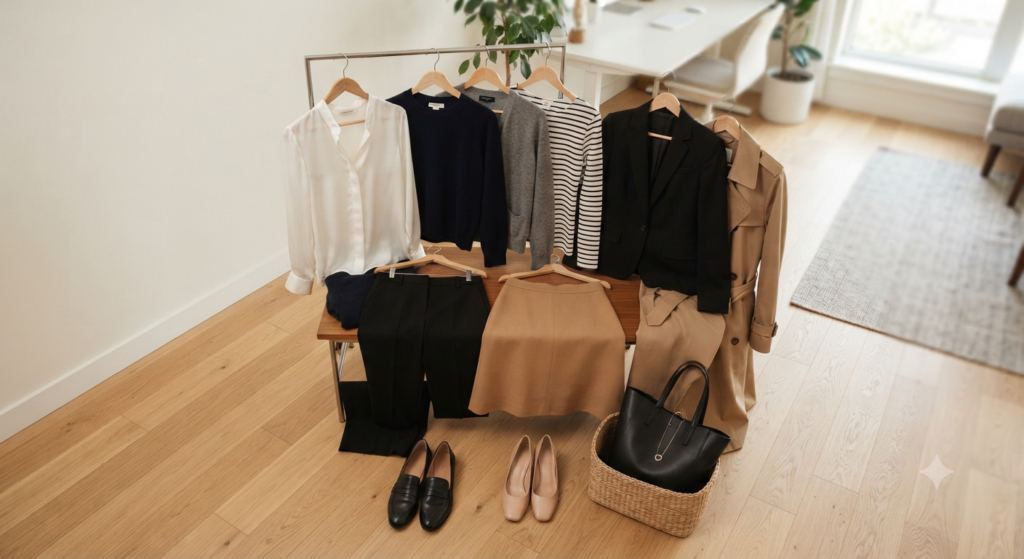
You don’t need thirty outfits — you need about ten pieces that mix and match well. A simple approach:
- Start with neutrals. Navy, black, gray, and camel pieces pair with almost everything.
- Add two or three “statement” pieces. A bold blazer, a patterned skirt, or a colorful blouse keeps outfits from feeling repetitive.
- Prioritize fit over quantity. A tailor can transform a $40 blazer into something that looks twice the price.
- Buy shoes last. Once your tops and bottoms are settled, one or two shoe styles (a loafer and a low heel, for example) will usually cover every outfit above.
This capsule approach also makes packing for work trips dramatically simpler, since everything is designed to be interchangeable.
Common Work Outfit Mistakes to Avoid
- Ignoring fabric care. Wrinkled linen or a stretched-out knit undercuts even a great outfit.
- Over-accessorizing. In most offices, one statement piece (a bag, a necklace, a blazer) is plenty.
- Dressing for the weather outside instead of the office inside. Offices are often over air-conditioned; a light cardigan or blazer solves this without changing your whole outfit.
- Assuming “business casual” means the same thing everywhere. It varies significantly by industry — what’s standard at a marketing agency may be too relaxed at an accounting firm.
Frequently Asked Questions

What is considered appropriate business casual attire? Business casual typically means tailored pants or a skirt, a blouse or button-down, and closed-toe shoes, with a blazer optional. Jeans, sneakers, and graphic tees are usually not included unless your specific office has confirmed otherwise.
Can I wear jeans to a business casual office? In many business casual workplaces, dark, non-distressed jeans are acceptable when paired with a blazer or structured top. It’s best to observe what coworkers wear before assuming this applies to your office.
What should I wear on my first day at a new job? Slightly overdress for your first week. A tailored blazer with dress pants or a structured dress works almost anywhere, and you can adjust once you see the office’s actual norms.
How many outfits do I need for a work wardrobe? Around 8–10 well-chosen, mix-and-match pieces (a few bottoms, several tops, one or two blazers, and two shoe styles) can typically create two to three weeks of varied outfits.
What’s the difference between business formal and business casual? Business formal generally requires suits or tailored dresses with conservative colors, while business casual allows more flexibility — separates, softer fabrics, and fewer formal requirements like blazers.
Final Thoughts
Dressing for work doesn’t have to mean choosing between comfort and professionalism. Once you understand your office’s dress code and build a small collection of versatile, well-fitting pieces, getting dressed in the morning becomes a lot less stressful — and a lot more like an outfit you actually chose, rather than one you settled for.
If you’re building out your work wardrobe this year, start with one or two outfits from this list that match your office style, and build outward from there. Small, intentional additions go a lot further than a full closet overhaul.

Post Comment