
Sneaker Shopping Guide: Finding Your Perfect Fit
Meta description: Sneaker Shopping Guide: Finding Your Perfect Fit. Everything you need to know before your next purchase — sizing, fit, materials, and budget tips.
(154 characters)
Ever bought sneakers online, felt great about the deal, and then spent the next six months either scrunching your toes or sliding around inside them? You’re not alone. Foot specialists estimate that a huge share of people are wearing the wrong shoe size right now, and sneakers are some of the worst offenders because sizing swings so much from brand to brand.
This guide walks you through everything you need to know before your next purchase — how to measure your feet properly, how to decode sizing charts that never seem to agree with each other, what to look for depending on how you’ll actually use the shoes, and how to shop smart whether you’re standing in a store or scrolling on your phone at midnight. By the end, you’ll be able to walk into (or click through) any sneaker purchase with a lot more confidence and a lot less guesswork.
Why Getting Sneaker Fit Right Matters More Than You Think
It’s tempting to treat sneaker fit as a minor detail — close enough is good enough, right? Not really. A poorly fitted sneaker doesn’t just feel uncomfortable; it can lead to blisters, black toenails, shin splints, and even changes in how you walk that put stress on your knees and hips over time.
Fit also affects performance. If you run, lift, or play sports, a shoe that’s too loose in the heel or too tight across the forefoot can throw off your balance and slow you down. And from a purely practical standpoint, shoes that fit well simply last longer, since your foot isn’t sliding around and wearing out the interior lining faster than it should.
The good news is that dialing in your fit isn’t complicated once you know what to check. It just takes a few extra minutes.
How to Measure Your Feet Correctly at Home
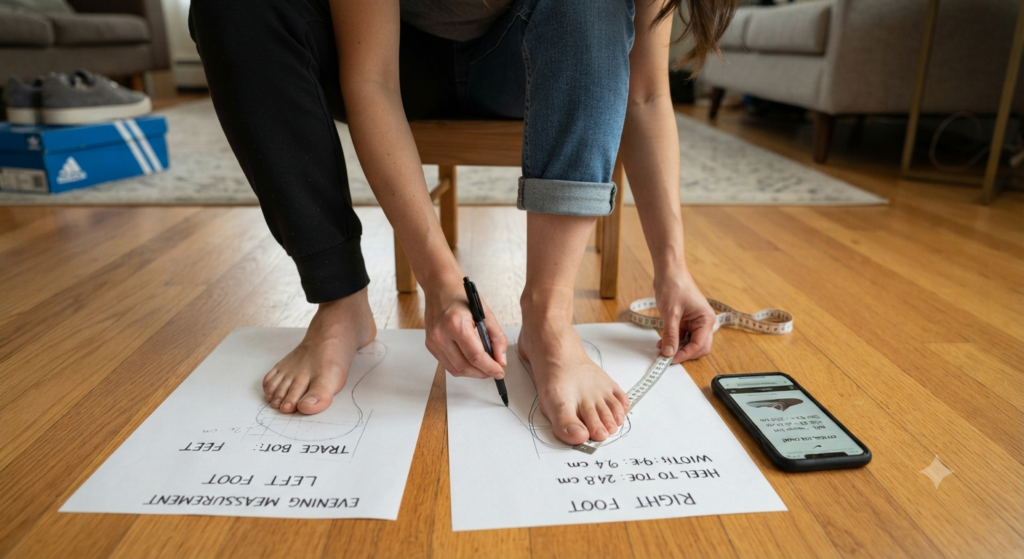
Most people measured their foot size once, maybe in elementary school, and have used that number ever since. Feet change with age, weight fluctuations, and even pregnancy, so it’s worth remeasuring every couple of years.
Tools You’ll Need
You don’t need anything fancy — just a piece of paper larger than your foot, a pencil, a ruler or tape measure, and a flat, hard floor (carpet throws off the measurement).
Step-by-Step Measuring Process
- Place the paper against a wall and stand on it with your heel touching the wall.
- Keep your weight evenly distributed, as if you were standing normally, not on your tiptoes.
- Have someone trace around your foot, keeping the pencil straight up and down.
- Measure from the wall to the tip of your longest toe — that’s your foot length.
- Repeat for the other foot, since most people have one foot slightly larger than the other. Always shop to the size of the larger foot.
- Measure the widest part of your foot across the ball for your width measurement.
Do this in the evening if you can. Feet swell slightly throughout the day, and shoes purchased around your smallest morning measurement often feel tight by dinnertime.
Understanding Sneaker Sizing Across Brands
Here’s the part that trips up almost everyone: a size 9 in one brand is not the same as a size 9 in another. Sizing standards vary by country, and even within the same country, brands adjust their lasts (the foot-shaped mold shoes are built around) differently.
US, UK, and EU Sizing Differences
US and UK sizing use different baseline scales, and EU sizing is based on the Paris point system, which measures in centimeters and converts to a different number entirely. A US men’s size 10 is roughly a UK size 9 and an EU size 44 — but “roughly” is doing a lot of work in that sentence, because actual fit still depends on the brand’s specific last.
Why the Same Size Feels Different Between Brands
Running shoe brands in particular are notorious for sizing inconsistently. One popular running brand tends to run about half a size small, while another runs true to size but narrow through the midfoot. This isn’t a flaw exactly — it’s just a result of different companies designing around slightly different average foot shapes.
The practical takeaway: don’t trust the number alone. If you’re buying a brand for the first time, check that brand’s specific size chart (most publish one), read a few reviews that mention sizing, and when in doubt, size up rather than down — a slightly loose shoe is more fixable than a cramped one.
Choosing the Right Sneaker for How You’ll Use It
Not all sneakers are built for the same job, even if they look similar on a shelf. Matching the shoe to the activity makes a bigger difference than most shoppers realize.
Running Shoes
Running shoes prioritize cushioning and forward flexibility. Look for a thumb’s width of space between your longest toe and the front of the shoe, since feet swell and slide slightly forward during long runs. A snug, secure heel is also essential to prevent blisters from repeated rubbing.
Casual and Lifestyle Sneakers
For everyday wear, comfort and a true-to-size fit matter more than performance features. These shoes are usually worn for extended hours, so prioritize breathable materials and a supportive footbed over trend-driven styling.
Training and Cross-Fit Shoes
If you’re lifting weights or doing multi-directional movement, you want a flatter, more stable sole rather than the thick, springy cushioning found in running shoes. Too much cushion under a heavy squat can actually make you less stable.
Basketball and Court Shoes
These need strong lateral (side-to-side) support and ankle stability, since quick direction changes put a lot of stress on the sides of the shoe, not just the front and back.
Materials, Width, and Arch Support: What to Actually Look For
Fit isn’t only about length. Width and arch support are just as important, and they’re the details most people skip entirely.
Width: If your feet look wider than average in your measurement, look specifically for brands that offer wide or extra-wide options rather than just buying a longer shoe to compensate — length and width solve different problems.
Arch support: People with flat feet generally need more structured, motion-control support, while people with high arches often need extra cushioning to absorb impact. If you’re not sure which category you fall into, the classic “wet foot test” works well: wet your foot, step on a brown paper bag, and look at the print. A full, connected footprint suggests flat feet; a print with a thin sliver connecting heel and forefoot suggests a high arch.
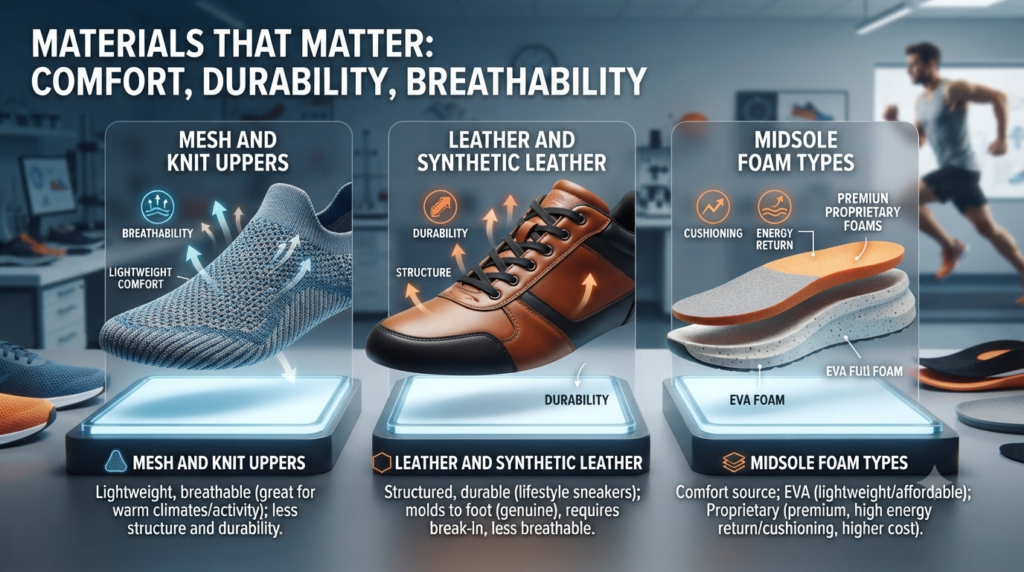
Materials: Mesh uppers breathe well and suit warm climates or high-intensity activity, while leather and synthetic leather offer more structure and durability but less airflow. If you sweat heavily or live somewhere hot, breathability should be a top priority over looks.
Sneaker Shopping Online vs. In-Store: Pros, Cons, and Practical Tips
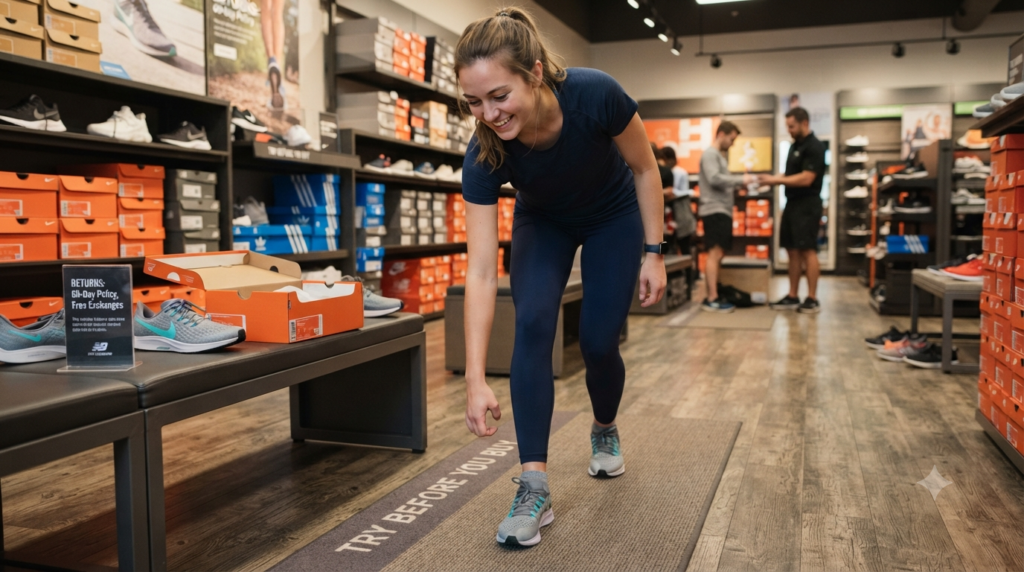
Both approaches have real advantages, and the smartest shoppers often use a mix of both.
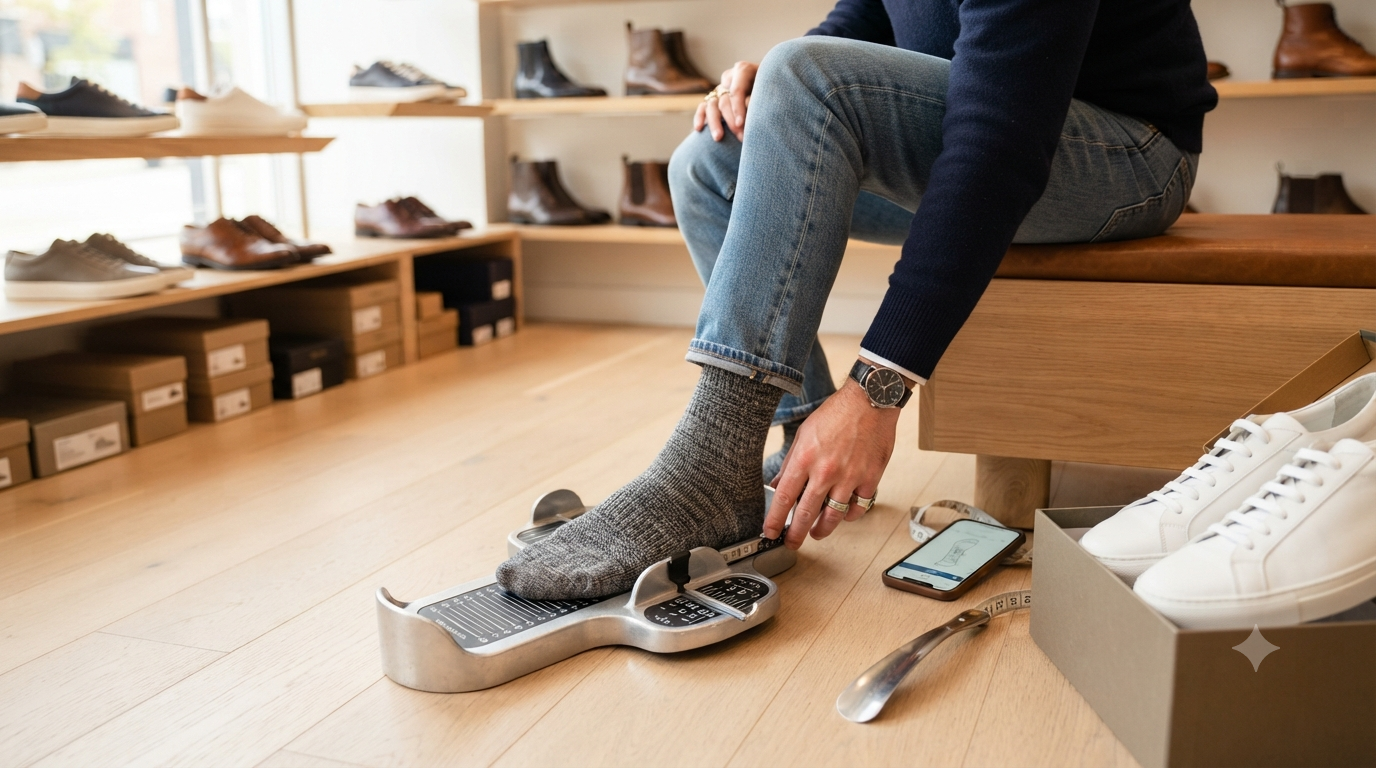
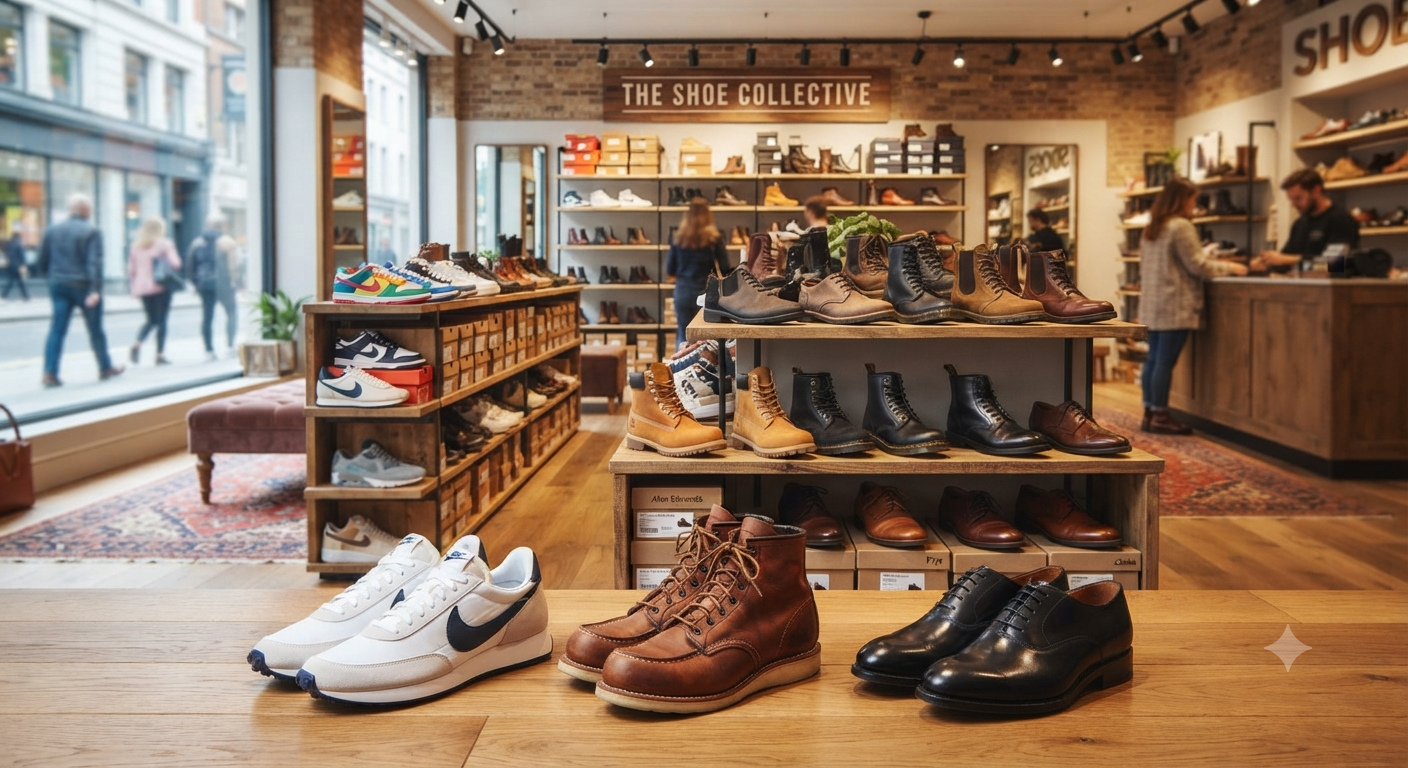
Shopping in-store lets you try the shoe on, walk around, and feel immediately whether something’s off. Go later in the day when your feet are at their largest, and always try on both shoes, not just one.
Shopping online usually offers better prices and a wider selection, but sizing risk is real. Before buying online:
- Check the brand’s specific size chart rather than assuming your usual size
- Read reviews that specifically mention whether the shoe runs small, large, narrow, or wide
- Confirm the return policy covers worn-once returns, since you can’t know for sure until you’ve walked around your living room in them
- If you’re between sizes, most footwear experts recommend sizing up
A hybrid approach works well too: try a brand on in-store once to learn how it fits you, then buy that same brand online in the future with confidence.
Budget Tips: Getting Quality Without Overspending
Sneaker prices vary wildly, but a higher price tag doesn’t automatically mean better fit or durability. A few ways to shop smart:
- Buy last season’s model. Brands often release minor updates yearly, and the previous version is usually just as good at a fraction of the price.
- Watch for outlet and factory-direct sales, which frequently offer authentic pairs at steep discounts.
- Prioritize your primary use case and don’t overspend on features you won’t use — a casual walker doesn’t need marathon-grade cushioning technology.
- Invest more in shoes worn daily and less in occasional-use pairs, since cost-per-wear matters more than sticker price.
Quality construction, proper fit, and the right materials for your use case will serve you better long-term than chasing the most expensive option on the shelf.
Frequently Asked Questions
How much space should be at the end of my sneakers? About a thumb’s width — roughly half an inch — between your longest toe and the front of the shoe. This allows for natural foot swelling during activity without being too loose.
Should I size up or down if I’m between sizes? Size up. A slightly larger shoe can be managed with a thicker sock or insole, while a shoe that’s too small will consistently cause discomfort and can’t be easily fixed.
Why do my sneakers fit fine in the store but feel tight later? Feet naturally swell throughout the day, especially after standing or walking. Shoes tried on in the morning often feel tighter by evening, which is why trying shoes on later in the day gives a more accurate fit.
Do I need different sneakers for different activities? Yes, ideally. Running, training, and casual wear all put different stresses on your feet, and shoes designed for one purpose often perform poorly — and wear out faster — when used for another.
How often should I replace my sneakers? For regularly worn athletic shoes, most experts suggest replacing them every 300 to 500 miles of use or roughly every six to twelve months, depending on frequency of wear and visible sole wear.
Final Thoughts: Shop Smarter, Not Just Trendier

Finding your perfect sneaker fit really comes down to a handful of habits: measuring your feet properly, understanding that sizing isn’t universal across brands, matching the shoe to your actual activity, and paying attention to width and arch support instead of just length. None of this takes much extra time, but it makes a real difference in comfort, performance, and how long your sneakers actually last.
Next time you’re ready to shop, take five minutes to measure your feet, check the specific brand’s size chart, and think honestly about what you’ll actually be doing in these shoes. Your feet will thank you — and so will your wallet, since you won’t be replacing a poorly fitted pair a few months down the line.
Ready to put this into practice? Start by measuring your feet tonight, and bring those numbers with you the next time you shop, whether that’s in-store or online.


Post Comment