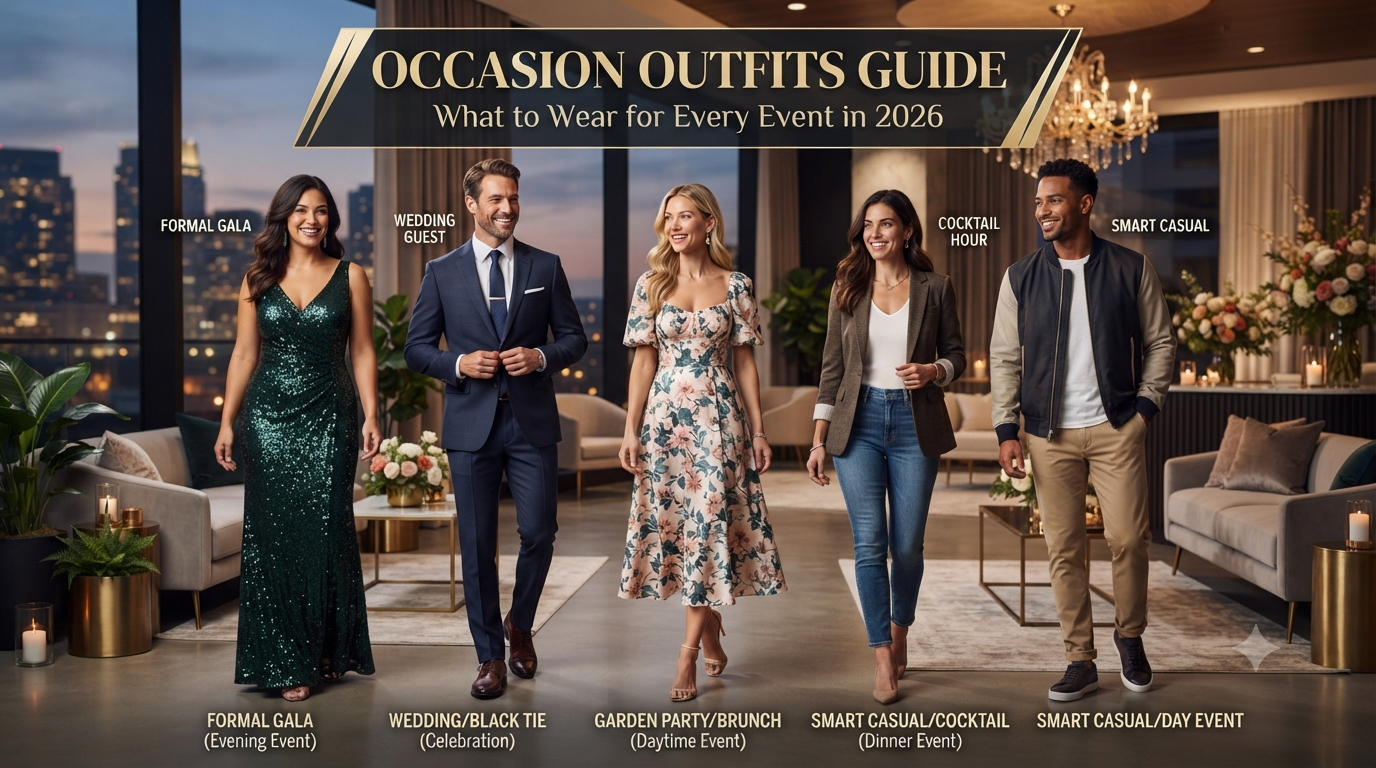
Occasion Outfits Guide: What to Wear for Every Event in 2026
Standing in front of your closet at 7 PM the night before a wedding, holding up three different dresses, none of which feel quite right — sound familiar? Most of us have been there. Figuring out what to wear isn’t really about fashion trends. It’s about reading the room correctly, feeling comfortable in your own skin, and not showing up under- or overdressed.
This guide walks through the outfit choices that actually work for the events people ask about most: weddings, formal dinners, parties, and the trickier occasions where the dress code isn’t spelled out for you. You’ll come away with practical outfit ideas, a few styling shortcuts, and a better sense of how to decode a dress code the next time an invitation lands in your inbox.
How to Decode Any Dress Code Before You Shop
Before picking an outfit, you need to know what you’re actually dressing for. Invitations often use vague terms, and misreading them is the fastest way to feel out of place.
Common Dress Code Terms, Explained
- Black tie — Floor-length gowns or cocktail dresses for women; tuxedos for men. This is the most formal tier you’ll typically encounter outside of state events.
- Formal / black tie optional — A step down from black tie. Long dresses are welcome, but a well-tailored cocktail dress works too. Men can wear a dark suit instead of a tux.
- Cocktail attire — Knee-length or midi dresses, dressy separates, or a suit for men. This is the sweet spot for most weddings and upscale dinners.
- Semi-formal — Similar to cocktail attire but with a bit more flexibility. Sundresses, jumpsuits, and blazers all fit.
- Casual or smart casual — Still put-together, just relaxed. Think tailored trousers, a nice top, or a sundress rather than jeans and sneakers.
If a dress code still feels unclear after reading the invitation, a quick message to the host is always better than guessing. Nobody minds the question, and it beats showing up in the wrong outfit entirely.
Wedding Guest Outfits: What Actually Works
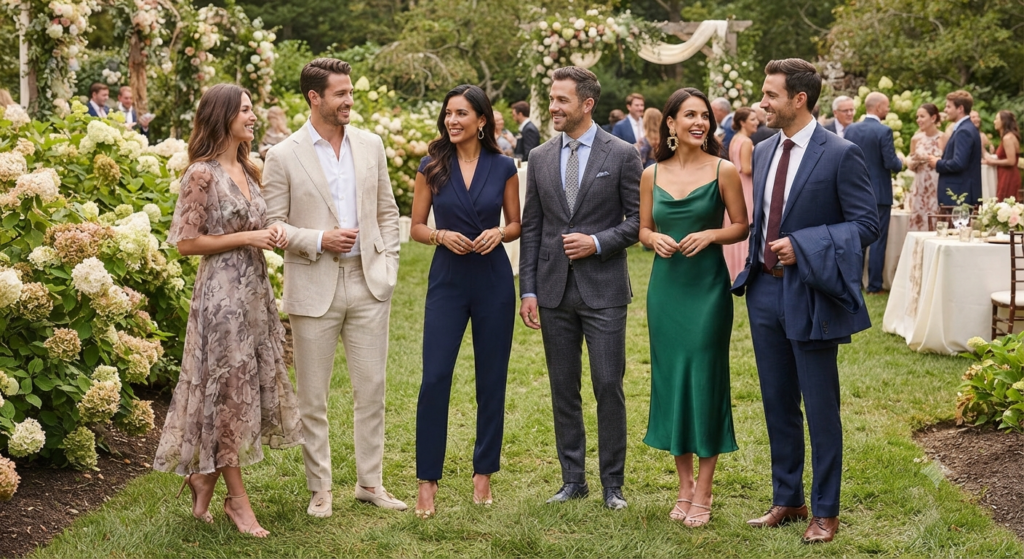
Wedding season brings the most outfit anxiety of any occasion, mostly because the “rules” (no white, no black at some weddings, nothing too flashy) can feel like a minefield.
For Daytime or Outdoor Weddings
Lighter fabrics and softer colors read better outdoors and in daylight. A flowy midi dress in a muted floral, a linen blend suit, or a tailored jumpsuit all work well. Avoid anything too structured or heavy — you’ll be uncomfortable, and it won’t photograph well against a garden or beach backdrop either.
For Evening or Indoor Weddings
This is where you can lean into richer colors and fabrics: jewel tones, velvet, satin, or a well-cut suit in a darker shade. A cocktail dress with a statement earring or a classic tux with a slightly unexpected tie color both hit the mark without overshadowing the couple.
A Quick Rule of Thumb
If you’re unsure how dressed up to be, it’s almost always safer to be slightly overdressed than underdressed at a wedding. A blazer or wrap can be added or removed depending on how the room reads once you arrive.
Formal Dinner Outfits That Don’t Feel Overdone
Formal dinners — whether it’s a work event, an anniversary dinner, or a fundraiser — call for a different kind of polish than a wedding. The goal is elegant, not flashy.
For Women
A tailored sheath dress, a well-fitted jumpsuit, or a silk blouse paired with wide-leg trousers all strike the right balance. Stick to one statement element at a time: if the dress has interesting detailing, keep jewelry simple, and vice versa.
For Men
A dark suit with a crisp shirt is rarely wrong. Skip the novelty tie or overly casual shoes — this is one occasion where classic choices consistently outperform trendy ones.
Styling Tip
Formal dinners are usually seated and indoors, so fabric that wrinkles easily (like linen) can work against you by the time dessert arrives. Structured fabrics like wool blends or ponte knit hold their shape much better through a long evening.
Party Outfits for Every Kind of Celebration

Parties cover the widest range of any occasion — birthdays, holiday parties, engagement celebrations — so the right outfit really depends on the vibe.
Cocktail Parties
A fitted dress in a bold color or print, paired with heels or dressy flats, is the classic choice. For men, a blazer over a button-down (tie optional) usually fits the energy of a cocktail party without feeling stiff.
Holiday and Festive Parties
This is the one occasion where a little sparkle or metallic is genuinely welcome. A sequin top with tailored trousers, or a suit with a subtly festive pocket square, adds seasonal flair without tipping into costume territory.
Casual House Parties or Backyard Gatherings
Comfortable doesn’t have to mean boring. A well-fitted jumpsuit, a nice pair of jeans with an elevated top, or a casual dress with sneakers all read as put-together without being overdone for a relaxed setting.
Building an Occasion-Ready Capsule Wardrobe
Rather than buying something new for every event, a small collection of versatile pieces can cover most occasions on this list.
- One neutral-toned dress (black, navy, or deep green) that works for weddings, dinners, and parties alike
- A tailored blazer to dress up jeans or dress down a formal outfit
- Quality basics — a well-fitted white shirt, black trousers, and a dark suit — that mix and match across dress codes
- Two pairs of shoes: one classic heel or dress shoe, one comfortable-but-polished flat or loafer
- A few statement accessories (earrings, a scarf, a pocket square) to change up the same base outfit for different events
This approach isn’t just budget-friendly — it also takes the guesswork out of last-minute invitations, since you already have pieces that work.
Common Outfit Mistakes to Avoid
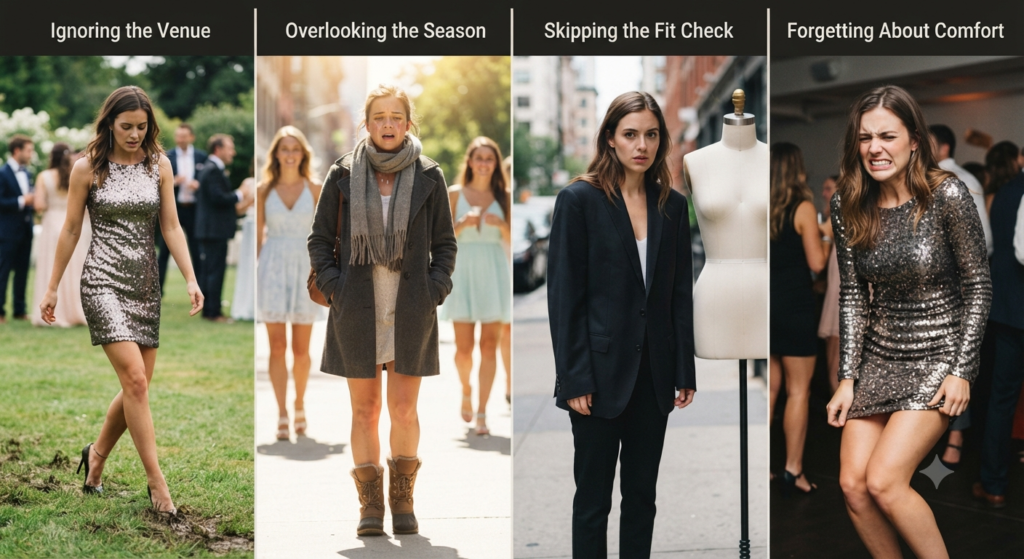
A few missteps come up again and again, regardless of the occasion:
- Ignoring the venue — An outdoor wedding in stilettos, or a formal indoor dinner in beach-appropriate sandals, rarely ends well.
- Overlooking the season — Heavy fabrics in summer or thin ones in winter throw off both comfort and appearance.
- Skipping the fit check — Even an expensive outfit looks off if it doesn’t fit properly. A quick tailoring appointment often makes more difference than the price tag of the item itself.
- Forgetting about comfort — If you can’t move, sit, or dance comfortably, the outfit isn’t working for you, no matter how good it looks in the mirror.
Frequently Asked Questions
What should I wear if the invitation doesn’t specify a dress code? When there’s no dress code listed, cocktail attire is a safe default for most evening events, and smart casual works well for daytime or outdoor gatherings. When in doubt, checking with the host directly is always a reasonable option.
Is it ever okay to wear black to a wedding? Yes, in most cases. Black is generally acceptable at evening or formal weddings unless the couple has specifically requested otherwise. It’s typically avoided at more traditional or daytime ceremonies, where lighter colors are more common.
How formal should a work dinner outfit be? Work dinners usually call for business formal or smart casual, depending on the company culture. A tailored dress or suit is rarely wrong, but it’s worth checking with colleagues or the invitation for cues on how dressed up the event actually is.
What’s the difference between cocktail attire and semi-formal? Cocktail attire tends to be a bit more polished and includes structured dresses or suits, while semi-formal allows for slightly more relaxed options like sundresses or dressy separates. The line between them is blurry, so either interpretation is usually acceptable.
How can I dress up a casual outfit for an unexpected formal event? A blazer, statement jewelry, or a change of shoes can elevate a casual outfit quickly. Keeping one dressier piece on hand — like a blazer in your car or bag — is a simple way to handle last-minute dress code surprises.
Final Thoughts
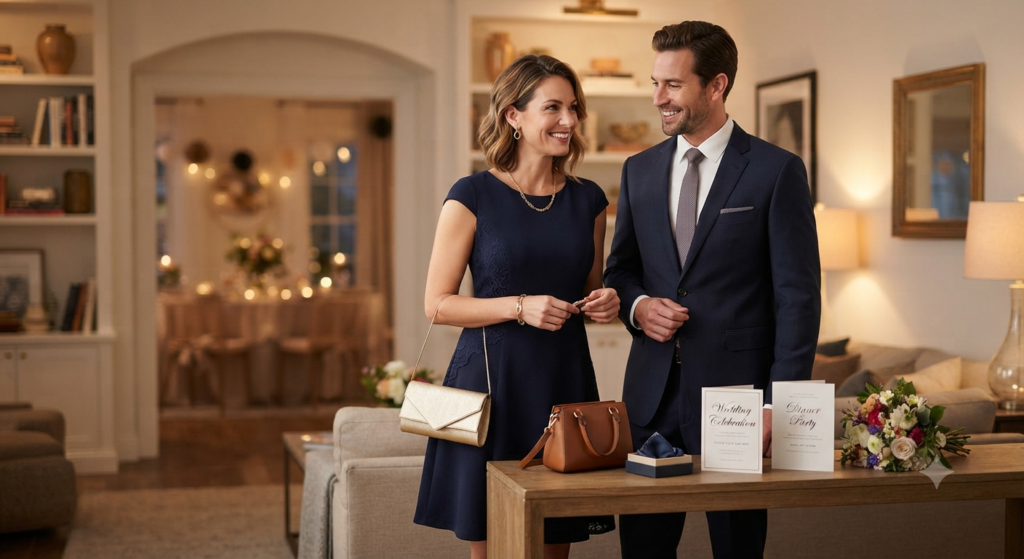
Getting dressed for a special occasion doesn’t need to involve last-minute panic or an overflowing shopping cart. Once you understand how to read a dress code and build a small wardrobe of versatile, well-fitting pieces, most invitations become a lot less stressful to plan for.
The next time an invite lands in your inbox, come back to this guide, or bookmark it for reference before your next wedding, dinner, or party. And if you’re looking for more specific styling advice — like how to accessorize a cocktail dress or choose the right suit color for your skin tone — check out our related style guides for a deeper dive into each occasion.

Post Comment