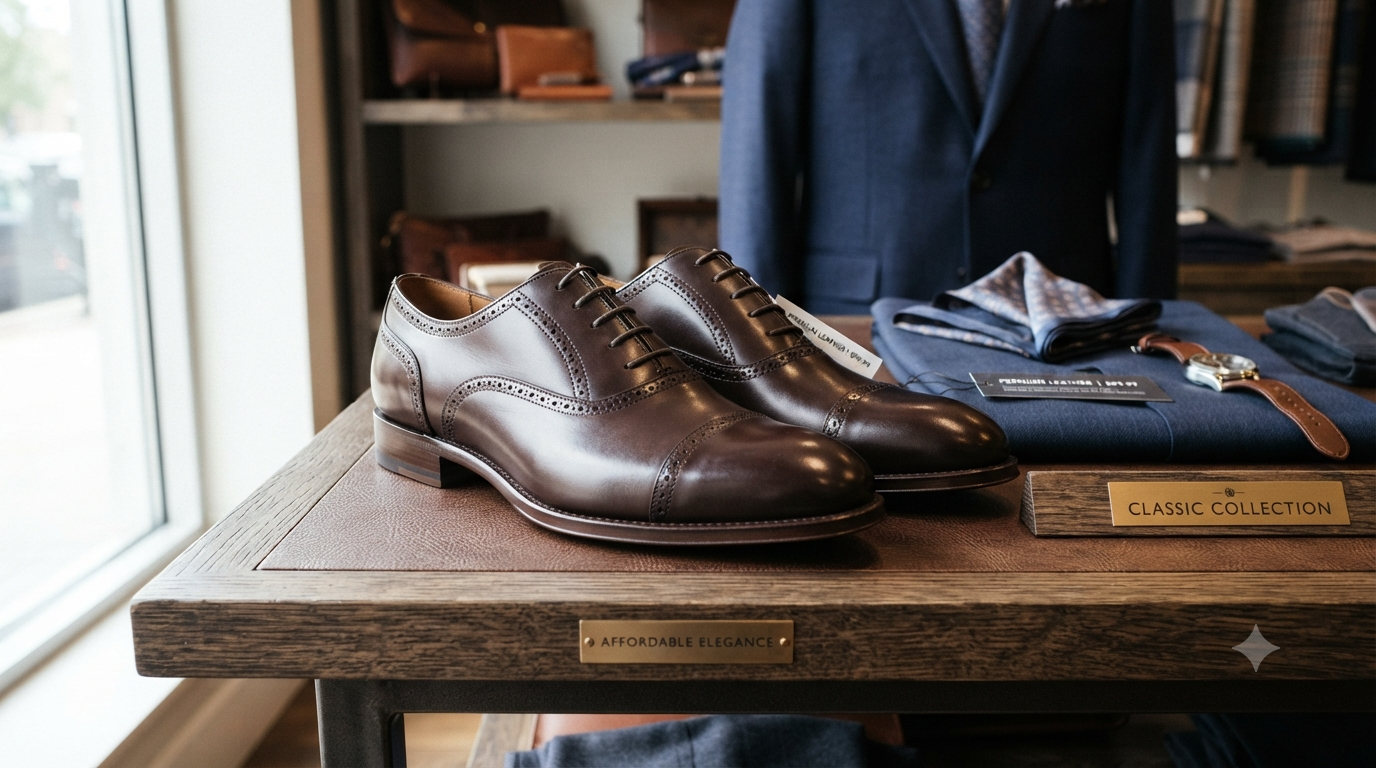
Premium Leather Formal Shoes at Affordable Prices
Ever bought a pair of sneakers online, waited a week for them to arrive, and then immediately known—within about three seconds of trying them on—that you’d made a mistake? You’re not alone. Sneaker returns are one of the most common headaches in online shopping, and most of the time it comes down to the same handful of avoidable mistakes: wrong size, wrong width, wrong shoe for the wrong activity.
This sneaker shopping guide is here to fix that. Whether you’re buying your first pair of running shoes, replacing worn-out everyday kicks, or just tired of guessing at sizes, this is everything you need to know before your next purchase. We’ll walk through sizing, materials, fit, budget, and the questions that actually matter—no jargon, no fluff.
Why Getting the Right Fit Matters More Than You Think
A sneaker that doesn’t fit properly isn’t just uncomfortable. Over time, it can lead to blisters, black toenails, shin splints, and even long-term foot problems like bunions or plantar fasciitis. Podiatrists routinely point out that ill-fitting shoes are one of the most preventable causes of foot pain they see in their offices.
The tricky part is that “fit” isn’t just about length. It’s about width, arch support, heel lock, and how the shoe behaves once you’re actually moving in it—not just standing in front of a mirror. A shoe that feels fine for two minutes in a store can feel completely different after a 30-minute walk or a 5K run.
The Real Cost of Buying the Wrong Pair
Think about it this way: a $90 pair of sneakers that gets returned, re-shipped, and re-boxed isn’t just a hassle for you—it’s wasted time, wasted shipping, and often a shoe that ends up in a landfill because it can’t be resold as new. Getting it right the first time saves money, saves the planet a little, and saves your feet.
How to Measure Your Feet Correctly (Most People Get This Wrong)
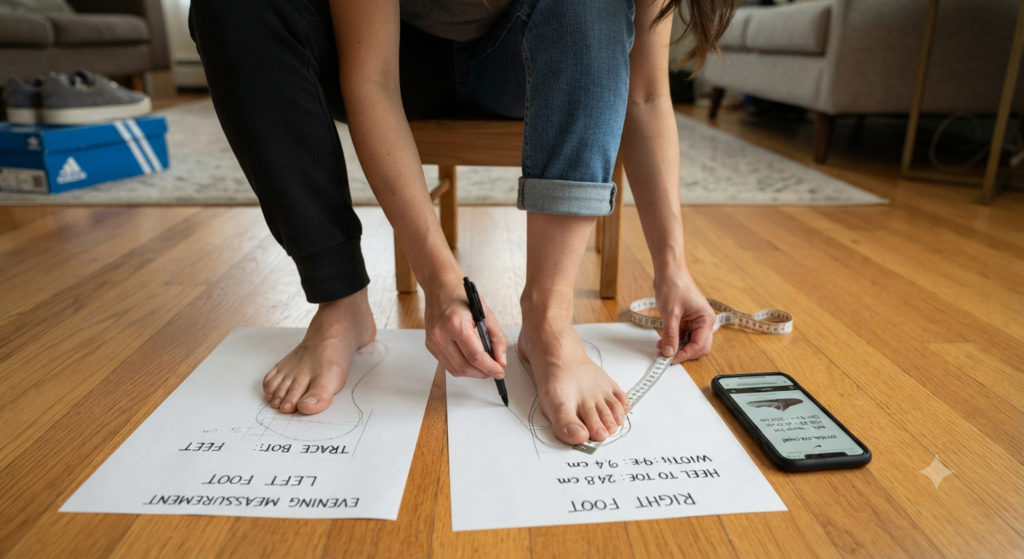
Here’s a fact that surprises a lot of people: nearly 90% of people wear the wrong shoe size, according to podiatric research cited widely in footwear studies. Feet also change size over time—pregnancy, aging, and weight fluctuations can all shift your measurements by half a size or more.
Direct answer: To measure your feet at home, stand on a piece of paper, trace both feet, measure the longest point (heel to toe) in centimeters, and compare it to the brand’s official size chart—not a generic size conversion chart.
Step-by-Step Foot Measuring
- Measure your feet in the evening, when they’re at their largest (feet swell slightly throughout the day).
- Trace both feet separately—most people have one foot slightly bigger than the other.
- Always size to the larger foot.
- Measure width as well as length, especially if you have a wider or narrower foot than average.
- Re-measure every couple of years, especially after major life changes.
Understanding Brand-Specific Sizing
This is where a lot of guides fall short: shoe sizing is not standardized across brands. A size 10 in Nike doesn’t fit the same as a size 10 in New Balance or Adidas. Running shoe brands in particular tend to run differently because of how their lasts (the foot-shaped mold a shoe is built around) are designed.
Practical tip: Before buying from a new brand, check that brand’s specific size chart rather than assuming your usual size applies. Most reputable retailers post these charts directly on the product page.
Types of Sneakers and What They’re Actually Built For
Not all sneakers are created equal, and using the wrong type for the wrong activity is one of the fastest ways to end up with sore feet or premature wear.
Running Shoes
Built for forward motion, with cushioning concentrated in the heel and forefoot. They’re typically lighter and more flexible than lifestyle sneakers, but they wear out faster—usually every 300–500 miles.
Cross-Training Shoes
Designed for lateral movement and gym work—think weightlifting, HIIT classes, or general fitness. They have flatter, more stable soles than running shoes, which helps with balance during lifting.
Everyday/Lifestyle Sneakers
These prioritize style and comfort over performance. Think classic silhouettes you’d wear with jeans. They’re fine for walking and daily wear but aren’t built for serious mileage or athletic performance.
Basketball and Court Shoes
Built for quick stops, pivots, and lateral cuts, with more ankle support and a grippier outsole for indoor courts.
Quick tip: If you’re only buying one pair and need versatility, a well-cushioned cross-trainer or lifestyle sneaker with decent arch support usually covers the most ground.
Materials That Matter: Comfort, Durability, and Breathability

The upper material of a sneaker affects everything from how it fits to how long it lasts.
Mesh and Knit Uppers
Lightweight and breathable, great for warm climates or high-sweat activities. The downside: they offer less structure and durability than leather.
Leather and Synthetic Leather
More structured and durable, often used in lifestyle sneakers. Genuine leather molds to your foot over time but requires more break-in and less breathability.
Midsole Foam Types
This is where a lot of comfort actually comes from. EVA foam is lightweight and affordable; newer proprietary foams (like those used in premium running shoes) offer more energy return and cushioning but come at a higher price point.
Budgeting for Sneakers: What You’re Actually Paying For
Price ranges in sneakers vary wildly, and it’s worth understanding what drives the cost.
- Under $60: Basic construction, often fine for occasional or light use.
- $60–$120: The sweet spot for most everyday and moderate-activity sneakers—solid materials, decent cushioning technology.
- $120–$200+: Advanced cushioning systems, premium materials, and brand/performance technology (common in serious running or basketball shoes).
Important note: A higher price doesn’t automatically mean better fit. A $200 running shoe on the wrong foot shape will still hurt. Fit should always come before price when you’re deciding.
When It’s Worth Spending More
If you’re logging serious mileage (running, hiking, or being on your feet for work all day), investing more in cushioning and durability tends to pay off in comfort and shoe lifespan. For occasional wear, a mid-range pair is usually plenty.
Trying Sneakers On the Right Way (In-Store or At Home)
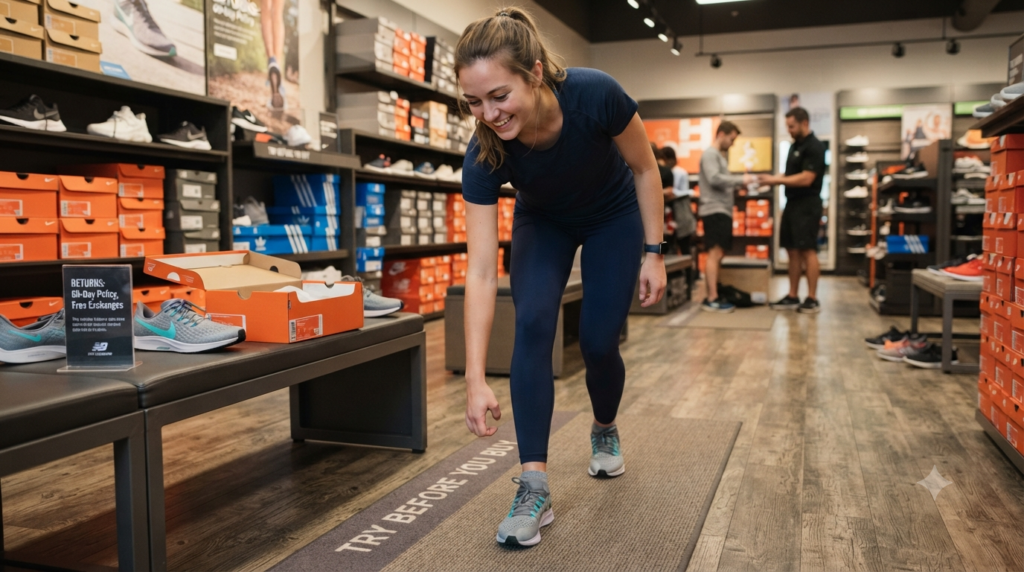
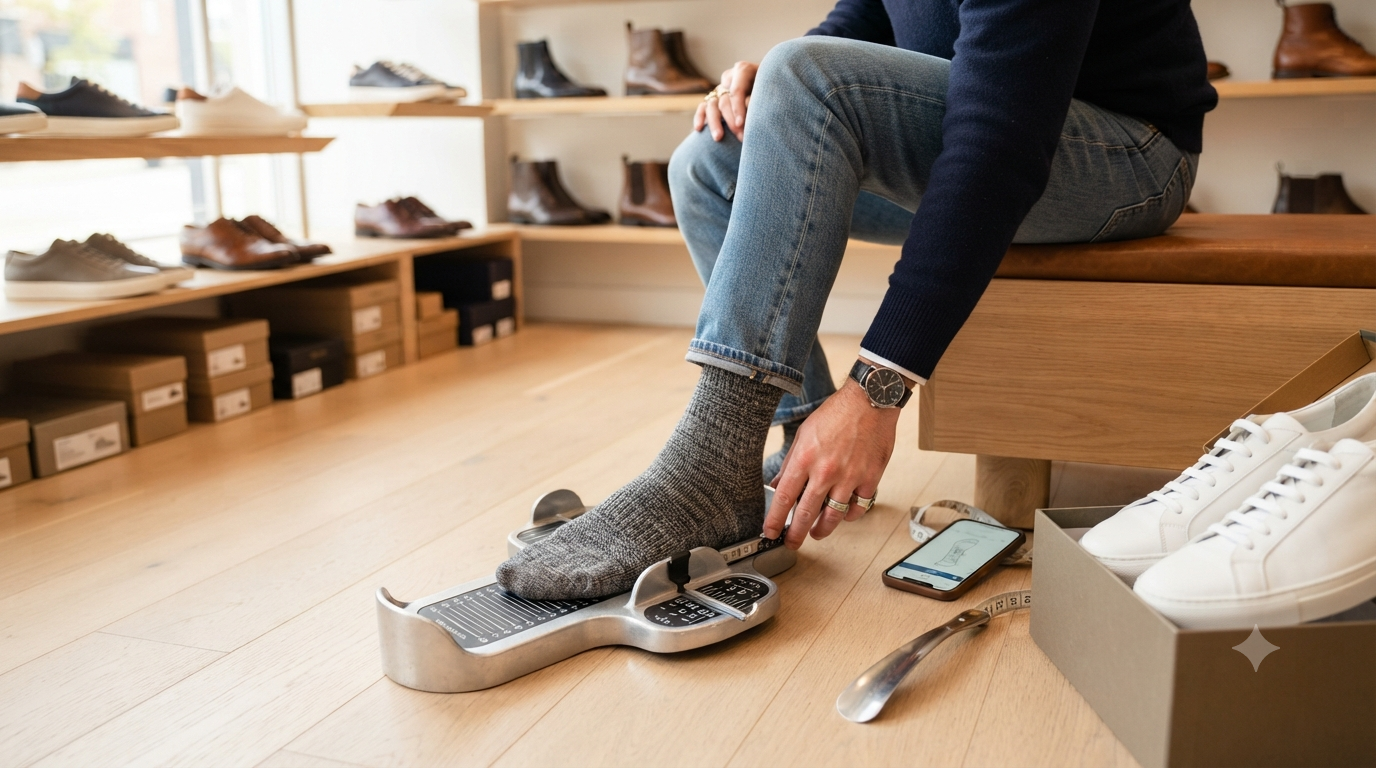
Whether you’re in a store or trying on an online order at home, the process should be the same.
- Try shoes on later in the day, when feet are naturally more swollen.
- Wear the socks you’d actually wear with them.
- Walk around for at least a few minutes—don’t just stand still.
- Check for a thumb’s width of space between your longest toe and the front of the shoe.
- Make sure your heel doesn’t slip when you walk.
- If ordering online, check the retailer’s return policy before buying, in case the fit is off.
Common Sneaker Shopping Mistakes to Avoid
- Assuming your size is the same across every brand. It rarely is.
- Buying based on looks alone without checking the activity fit. A stylish sneaker isn’t always a functional one.
- Ignoring width. Length isn’t the only measurement that matters.
- Skipping the break-in period test. Some materials (like leather) need time to adjust to your foot.
- Not checking the return window before buying online.
Frequently Asked Questions
How do I know my correct sneaker size? Measure your feet at home using the paper-tracing method, then compare the measurement to the specific brand’s official size chart, since sizing varies between brands.
Should I size up or down for sneakers? As a general rule, leave a thumb’s width of space between your longest toe and the shoe’s front. If you’re between sizes, sizing up slightly is usually safer than sizing down, especially for running shoes.
How often should I replace my sneakers? Running shoes typically last 300–500 miles before cushioning breaks down. Everyday sneakers can last 6–12 months with regular wear, depending on materials and usage.
Are expensive sneakers always better? Not necessarily. Price often reflects materials and technology, but fit and activity match matter more for comfort than price alone.
Can shoe size change over time? Yes. Pregnancy, aging, weight changes, and even long periods of standing can shift foot size by half a size or more, so it’s worth re-measuring every couple of years.
Final Thoughts: Buy Smarter, Not Just Faster

The right pair of sneakers isn’t about chasing the newest release or the highest price tag—it’s about matching fit, purpose, and comfort to how you actually plan to use them. Measure properly, know your activity type, check the materials, and don’t be afraid to return a pair that doesn’t feel right after a real test walk.
Ready to shop smarter? Take five minutes to measure your feet today, check your go-to brand’s size chart, and use this guide as your checklist before you check out. Your feet will thank you.


Post Comment