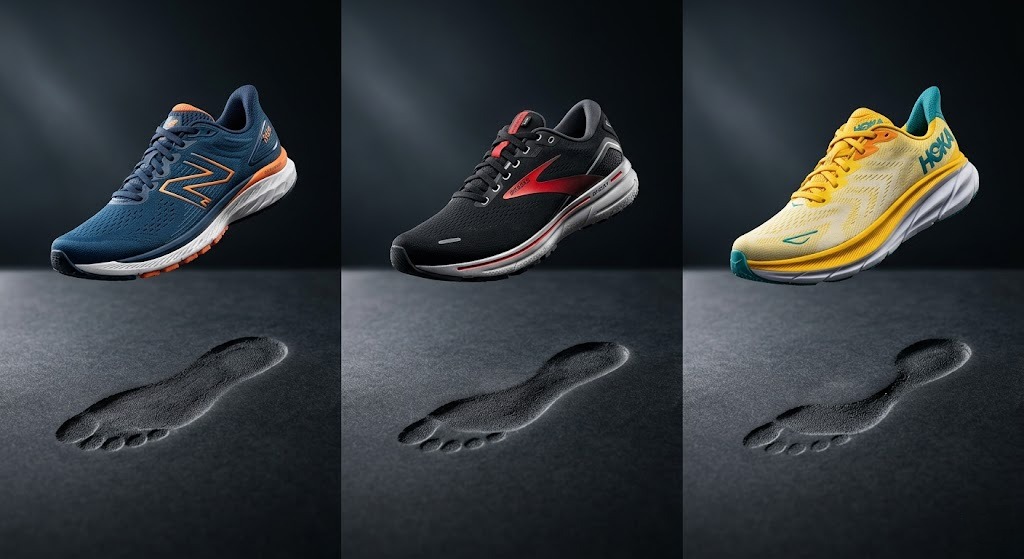
Stop the Scroll: Podiatrists Reveal the Best Shoes for Flat Feet & High Arches in 2026
The average person walks 1.5 to 2 miles daily. That is enough distance to cross the United States in just over two years. Yet 68% of runners wear ill-fitting shoes, and countless others unknowingly subject their feet to footwear that is actively working against their anatomy.
The result is a cascade of problems that rarely stop at the ankle. From plantar fasciitis and tendonitis to knee pain, hip misalignment, and even lower back strain, the wrong shoes can sabotage your entire kinetic chain.
Here is the good news: selecting the correct footwear for your specific arch type is not complicated. Armed with a simple at-home test and current podiatrist-backed recommendations, you can finally put your best foot forward. In this comprehensive guide, we will reveal exactly how to identify your foot type, why it matters for your long-term health, and the top-rated 2026 shoe models that podiatrists and editors are recommending right now.
The 2026 Wet Test: How to Determine Your Arch Type at Home
Before you can choose the right shoes, you need to understand your foundation. Your foot’s arch is the natural shape of the bottom of your foot. The arch is measured by looking at the middle of your foot to your heel and the pad of your foot.
The most reliable at-home method is the “wet footprint test.” Here is how podiatrists recommend performing it:
- Wet the soles of your feet in the shower or bath.
- Step directly onto a flat surface like a piece of cardboard, thick paper, or a towel.
- Step off and examine your footprint.
According to elite runners and chiropodists, the shape of your footprint reveals your arch type:
Flat Feet: You will see a full or almost complete footprint with little to no curve on the inner side. When standing, the middle of your foot likely touches the ground.
High Arches: You will see only the ball of your foot and your heel. The middle section is completely absent, creating a comma-like shape.
Neutral Arches: You will see a distinct curve along the inner side connecting the heel and ball, about half-filled. This is considered the “ideal” foot type.
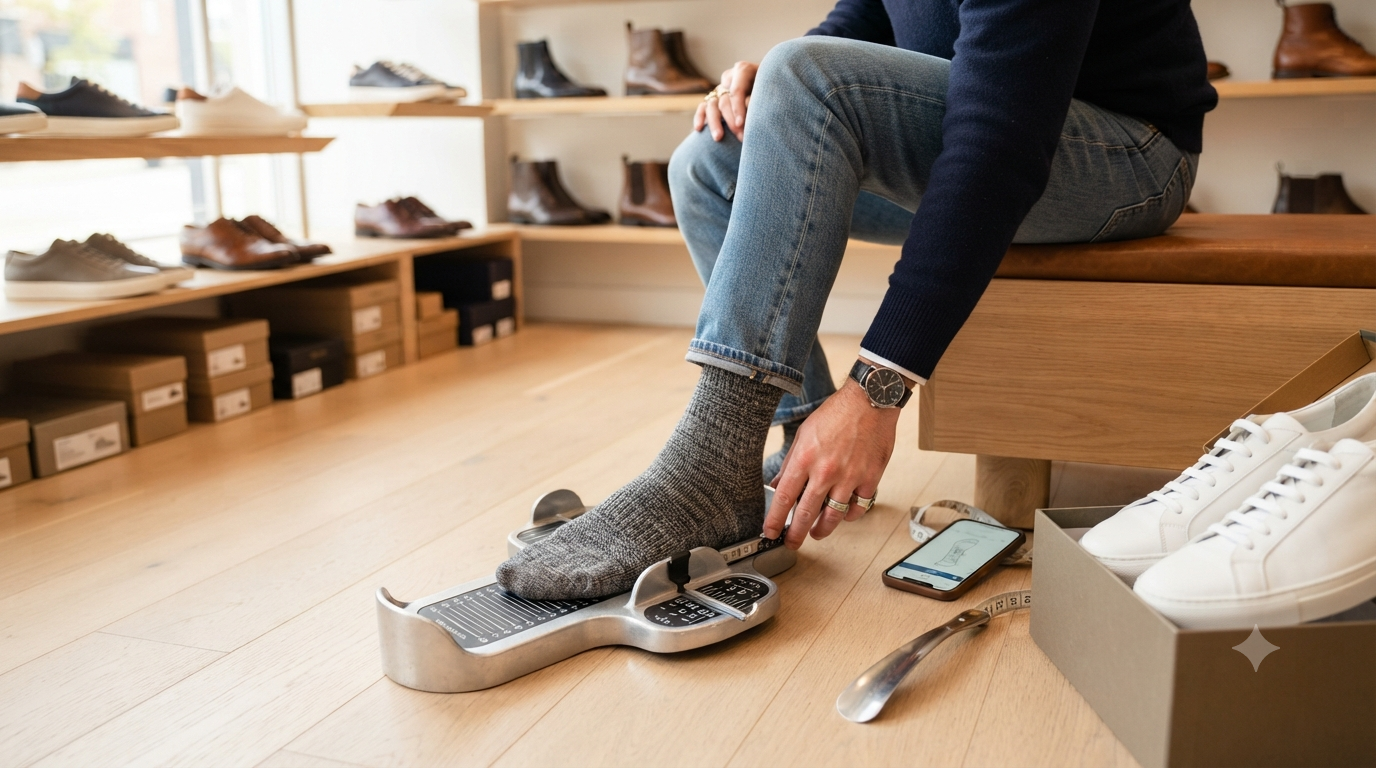
If you want a more in-depth analysis, many running stores now offer foot-scanning machines, and a podiatrist can provide a professional gait assessment.
Why Your Arch Type Matters More Than You Think
Your arches are your body’s natural shock absorbers. You can have a variety of different issues, from your ankles to knees to hips, based on your arch type. Understanding your arch type is not just about comfort. It is about preventing a chain reaction of musculoskeletal problems.
Understanding Flat Feet (Overpronation)
Flat feet sit close to the ground and tend to roll inward (overpronate) during walking or running. This requires more muscle activity to remain stable. According to podiatrists, flat feet are more susceptible to soft tissue overuse injuries such as tendinitis and plantar fasciitis.
Understanding High Arches (Underpronation/Supination)
High arches are essentially rigid feet that do not absorb shock effectively. People with high arches tend to walk on the outside of their feet (supination). These feet do not absorb shock as well when the foot hits the ground, which can lead to overuse injuries of the bones and joints. This also makes you more prone to knee, hip, and lower back pain.
The “Ideal” Neutral Arch
Neutral arches are considered the ideal type. They are not too high or too low and effectively distribute weight. However, truly perfect arches are rarer than most people think.
The Best Shoes for Your Foot Type
Once you know your arch type, the selection process becomes straightforward. Different foot types require different shoe characteristics.
Shoe Recommendations for Flat Feet
If you have flat feet, you need stability and motion control. Those with low arches will look for a shoe that offers stability and motion control.
What to look for:
- Stability or Motion Control shoes
- Firm, supportive midsoles that prevent your foot from rolling inward
- Wider midsoles to support the mid-portion of your arch
- Arch support to push the arch up slightly
Top podiatrist-recommended models:
| Shoe Model | Why It’s Recommended |
| Brooks Adrenaline GTS 25 | Features GuideRails support to control pronation without feeling overly rigid. |
| Asics Gel-Kayano 32 | Adaptive stability with 4D Guidance System. Orthotic-friendly. |
| Hoka Arahi 8 | H-frame technology provides support against overpronation with plush cushioning. |
| New Balance Fresh Foam X 880v15 | Firm medial post prevents excessive pronation. |
Shoe Recommendations for High Arches
For high arches, cushioning and shock absorption are the top priorities. Those with normal and high arches will look for a shoe with extra cushioning and shock absorption as well as a curved last shape.
What to look for:
- Neutral shoes with maximum cushioning
- Good shock absorption to make up for rigid feet
- More flexibility in the midsole
- Curved last shape
Top podiatrist-recommended models:
| Shoe Model | Why It’s Recommended |
| Hoka Clifton 10 | Ultralight cushioning with meta-rocker technology for smooth transitions. |
| Hoka Bondi 9 | Maximum cushioning and shock absorption. Minimal 5mm drop. |
| Brooks Ghost 17 | Neutral support with soft cushioning. Flexible and allows natural foot movement. |
| New Balance Fresh Foam X 880v15 | Excellent shock absorption with FreshFoam cushioning. |
Shoe Recommendations for Neutral Arches
If you have neutral arches, you have more flexibility. A shoe that supports your arch and has plenty of room is ideal. Stability running shoes with moderate support work well for neutral arches.
What to look for:
- Balanced cushioning that is not overly soft
- A comfortable fit with adequate toe box space
- Moderate stability without being restrictive
Shoe Features to Prioritize
Beyond arch type, podiatrists emphasize several universal features when evaluating footwear:
- Roomy Toe Box. A slightly wider toe box can improve comfort and reduce crowding, especially during long periods of walking.
- Removable Insoles. Look for a shoe that has an insole that contours to the bottom of your foot or has the ability to add additional arch support. Removable insoles allow you to use custom orthotics.
- Deep Heel Cup. This adds stability and support.
- Shoe Drop. The heel-to-toe drop (measured in mm) matters. Lower drops (0-6 mm) place more strain on calves and ankles, while higher drops (7+ mm) shift load to knees and hips.
- Shoe Longevity. Shoes and insoles should be replaced after 400-500 miles of use because they lose their structural integrity over time.
Brand Insight: Brooks and Asics running shoes offer pretty good arch support overall compared to many others. New Balance has always been an excellent choice for those with flat feet as it has the more rigid medial column to prevent excess pronation.
Shoes to Avoid for Foot Health
Podiatrists consistently warn against certain footwear categories regardless of your arch type:
- High Heels. Worn only occasionally; can cause or worsen foot problems.
- Flip-flops and Flat Sandals. Lack arch support and can lead to tendinitis.
- Thin, Flimsy Ballet Flats. Offer no support or shock absorption.
- Backless Shoes. Lack heel stability.
- Shoes That Are Too Tight or Too Loose. Can cause blisters, bunions, and hammertoes.
Everything is okay in moderation. But regular use of unsupportive footwear puts you at significant risk for injury.
The Role of Insoles and Orthotics
Sometimes, the shoe itself is not enough. Medical-grade inserts can provide arch support and cushioning, while custom orthotics can actually help minimize the risk of patients developing tendinitis and arthritis due to their foot type.
Insoles can be game-changers for both flat feet and high arches. If you already own a pair of shoes you love but need additional support, a high-quality over-the-counter insole or custom orthotic can provide the arch support your feet need. Many of the recommended shoe models above are designed to be orthotic-friendly, with removable insoles.
Final Verdict: Comfort is the Ultimate Guide
While arch type provides a crucial starting point, podiatrists agree on one overriding principle. The most important thing to consider when looking for a shoe is, is it comfortable and are you happy with the level of cushioning. I have always advocated for people to pick the most comfortable shoe. The literature backs this belief: using comfort as a guide for selecting the proper shoe correlates with a reduced injury risk.
The bottom line is straightforward: understand your arch type, prioritize stability for flat feet, prioritize cushioning for high arches, and above all else, choose shoes that feel right from the moment you put them on. Your feet and the rest of your body will thank you.

Post Comment